
Master's Degree Program in Nanosciences at the University of Basel
This document provides information about the Master's degree program in Nanosciences offered by the University of Basel and the Swiss Nanoscience Institute.
Studium in Nanowissenschaften an der Universität Basel Master’s Degree Program in Nanosciences
www.nanoscience.ch Follow us on:
1 You have reached the first key milestone on your journey to a career in the sciences. It is time to take the next step with a master’s!
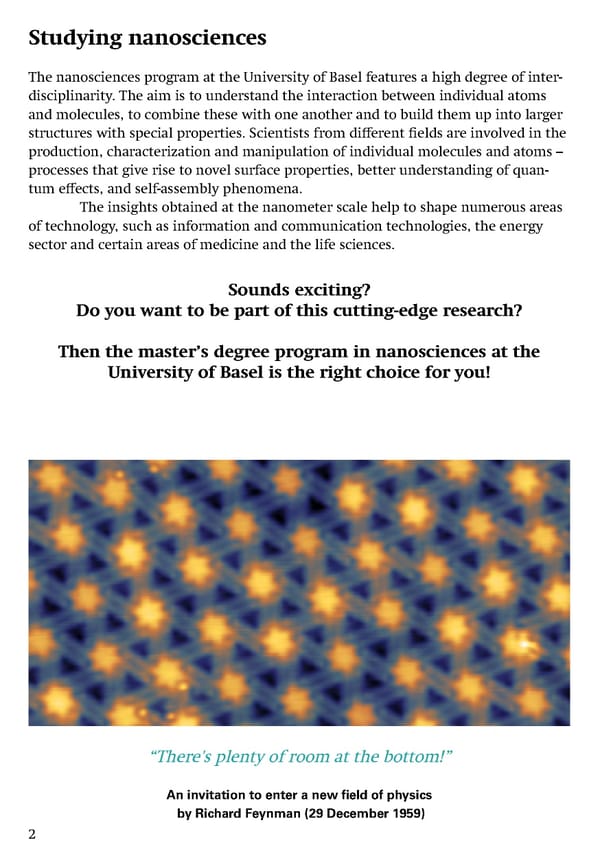
2 “There's plenty of room at the bottom!” An invitation to enter a new field of physics by Richard Feynman (29 December 1959) Studying nanosciences The nanosciences program at the University of Basel features a high degree of inter- disciplinarity. The aim is to understand the interaction between individual atoms and molecules, to combine these with one another and to build them up into larger structures with special properties. Scientists from different fields are involved in the production, characterization and manipulation of individual molecules and atoms – processes that give rise to novel surface properties, better understanding of quan- tum effects, and self-assembly phenomena. The insights obtained at the nanometer scale help to shape numerous areas of technology, such as information and communication technologies, the energy sector and certain areas of medicine and the life sciences. Sounds exciting? Do you want to be part of this cutting-edge research? Then the master’s degree program in nanosciences at the University of Basel is the right choice for you!
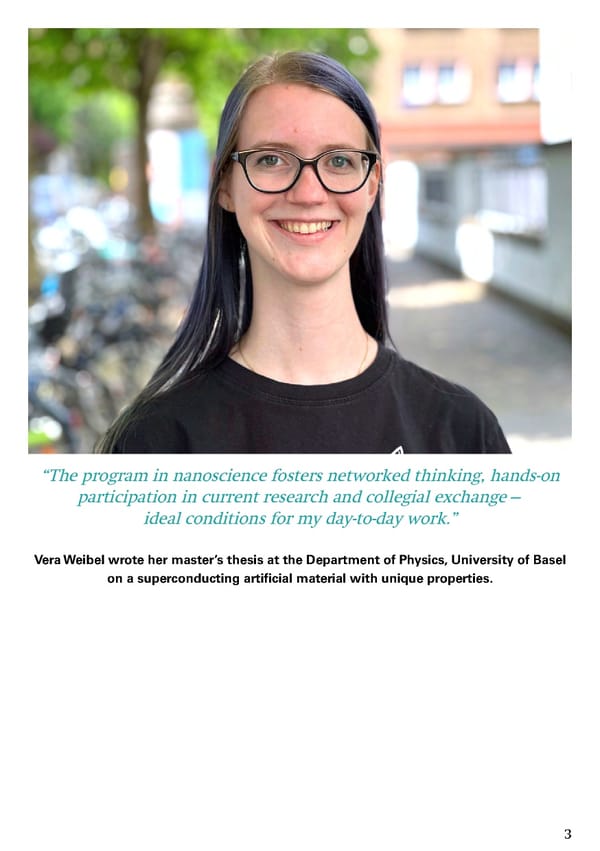
3 “The program in nanoscience fosters networked thinking, hands-on participation in current research and collegial exchange— ideal conditions for my day-to-day work.” Vera Weibel wrote her master’s thesis at the Department of Physics, University of Basel on a superconducting artificial material with unique properties.
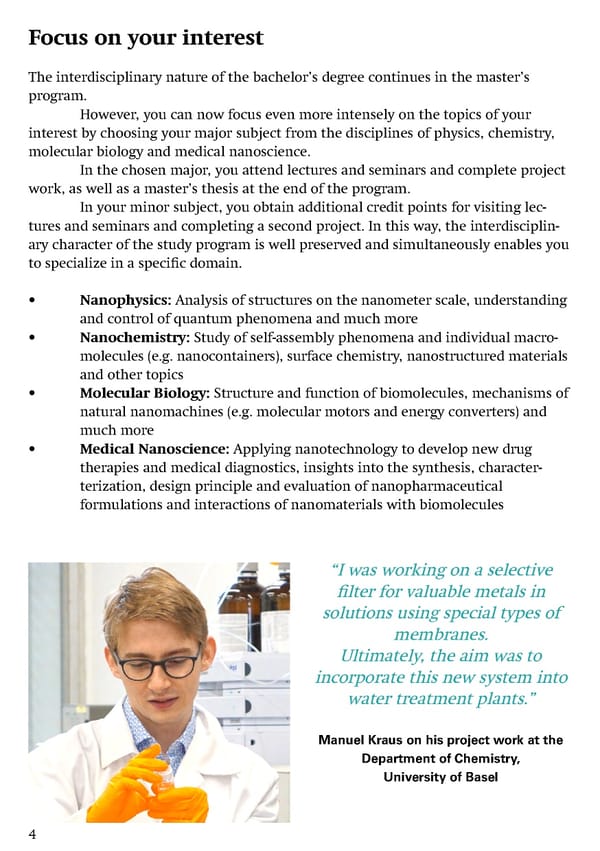
4 Focus on your interest The interdisciplinary nature of the bachelor’s degree continues in the master’s program. However, you can now focus even more intensely on the topics of your interest by choosing your major subject from the disciplines of physics, chemistry, molecular biology and medical nanoscience. In the chosen major, you attend lectures and seminars and complete project work, as well as a master’s thesis at the end of the program. In your minor subject, you obtain additional credit points for visiting lec- tures and seminars and completing a second project. In this way, the interdisciplin- ary character of the study program is well preserved and simultaneously enables you to specialize in a specific domain. • Nanophysics: Analysis of structures on the nanometer scale, understanding and control of quantum phenomena and much more • Nanochemistry: Study of self-assembly phenomena and individual macro- molecules (e.g. nanocontainers), surface chemistry, nanostructured materials and other topics • Molecular Biology: Structure and function of biomolecules, mechanisms of natural nanomachines (e.g. molecular motors and energy converters) and much more • Medical Nanoscience: Applying nanotechnology to develop new drug therapies and medical diagnostics, insights into the synthesis, character- terization, design principle and evaluation of nanopharmaceutical formulations and interactions of nanomaterials with biomolecules “I was working on a selective filter for valuable metals in solutions using special types of membranes. Ultimately, the aim was to incorporate this new system into water treatment plants.” Manuel Kraus on his project work at the Department of Chemistry, University of Basel
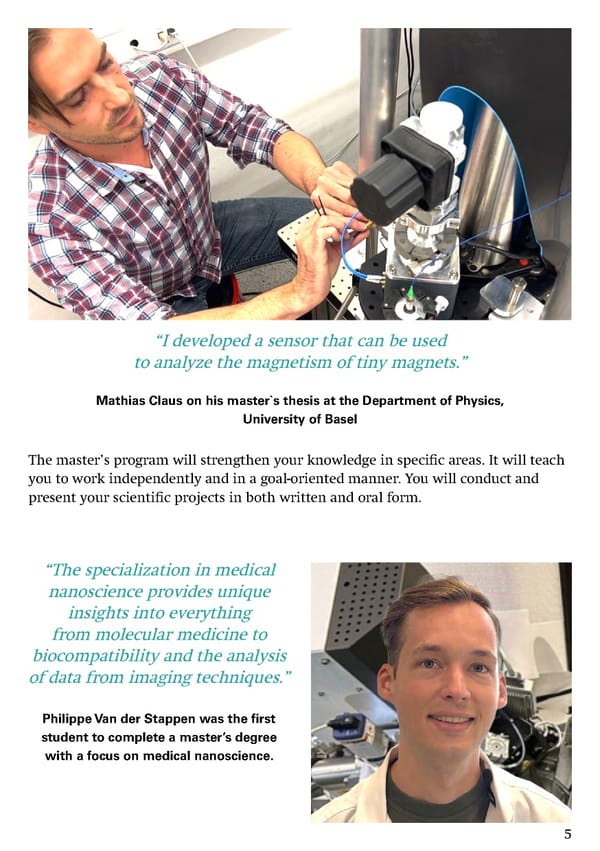
5 “The specialization in medical nanoscience provides unique insights into everything from molecular medicine to biocompatibility and the analysis of data from imaging techniques.” Philippe Van der Stappen was the first student to complete a master’s degree with a focus on medical nanoscience. “I developed a sensor that can be used to analyze the magnetism of tiny magnets.” Mathias Claus on his master`s thesis at the Department of Physics, University of Basel The master’s program will strengthen your knowledge in specific areas. It will teach you to work independently and in a goal-oriented manner. You will conduct and present your scientific projects in both written and oral form.
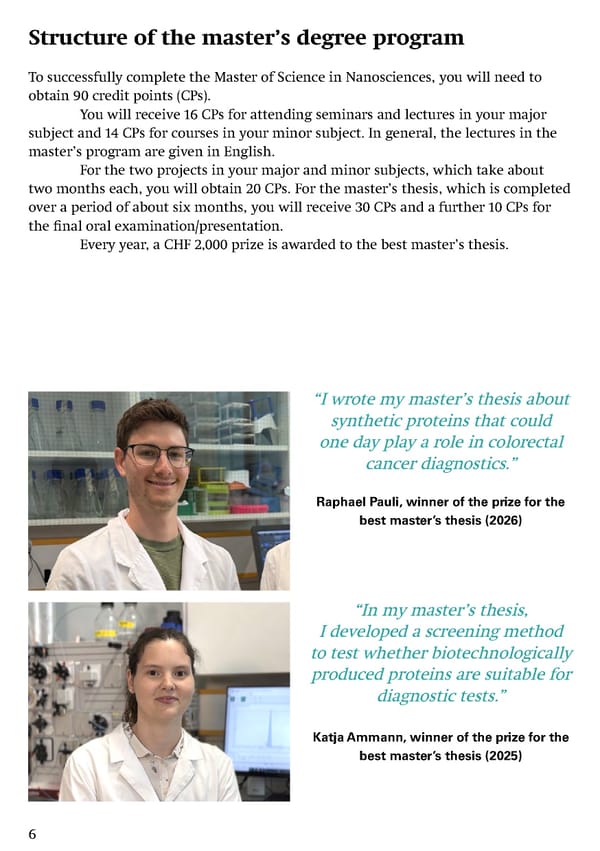
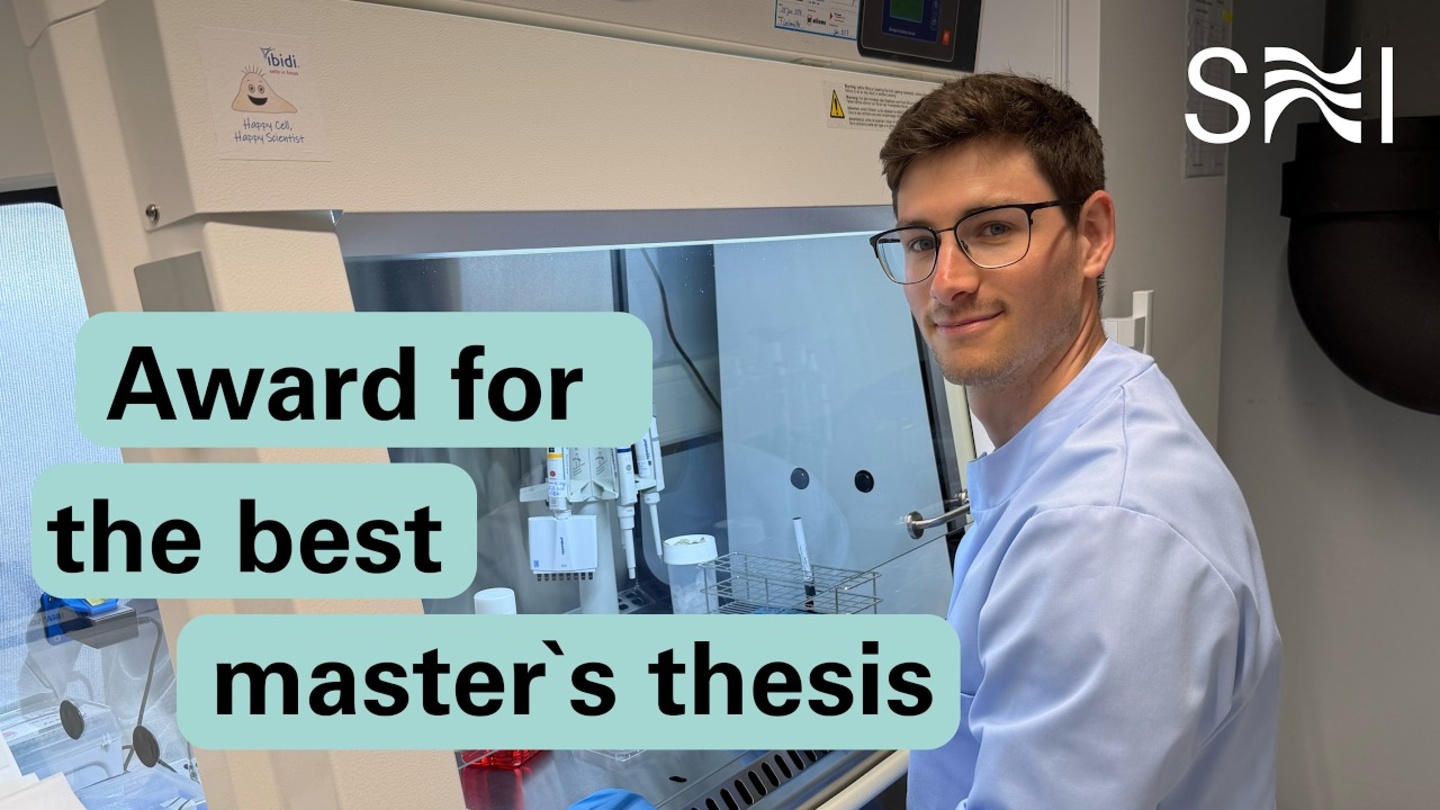
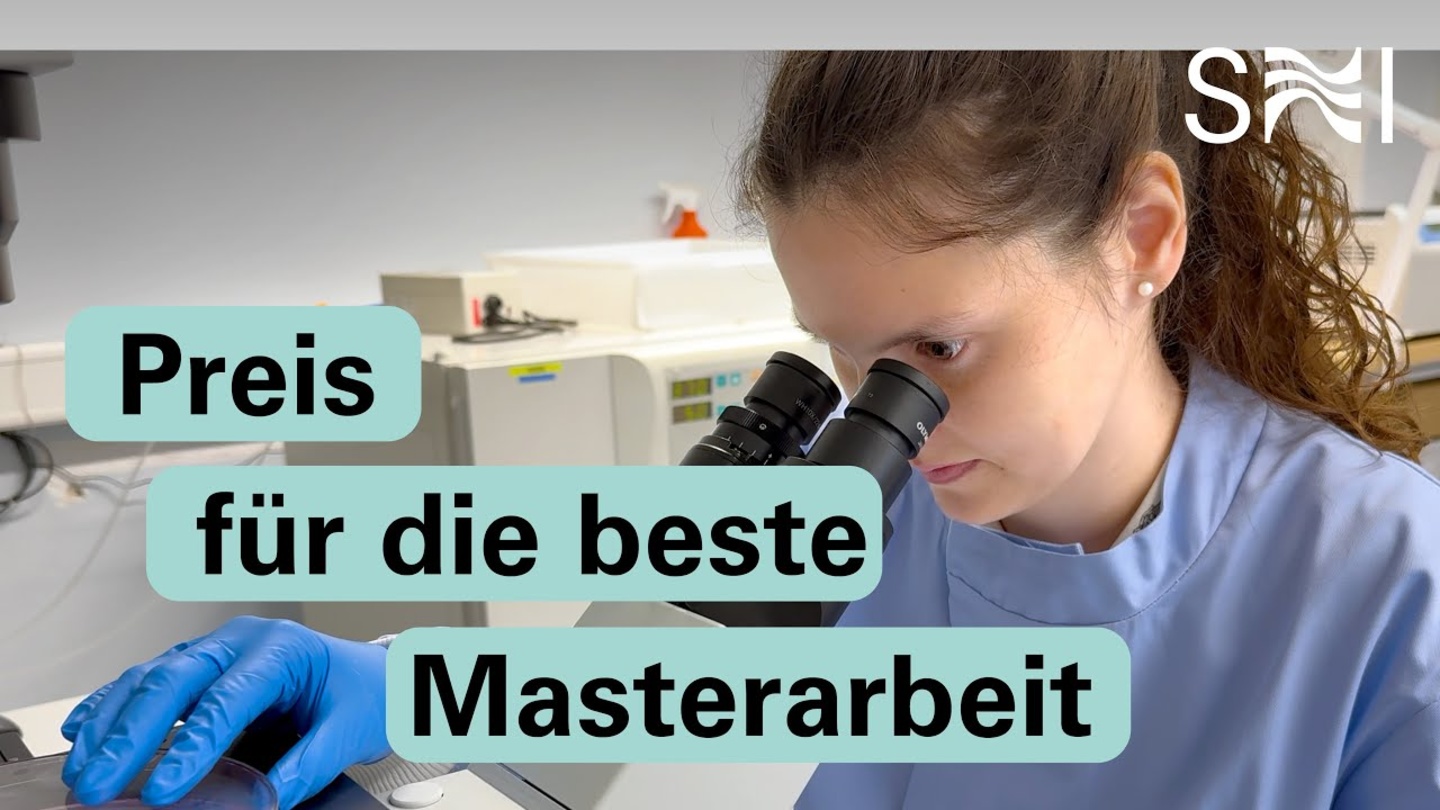
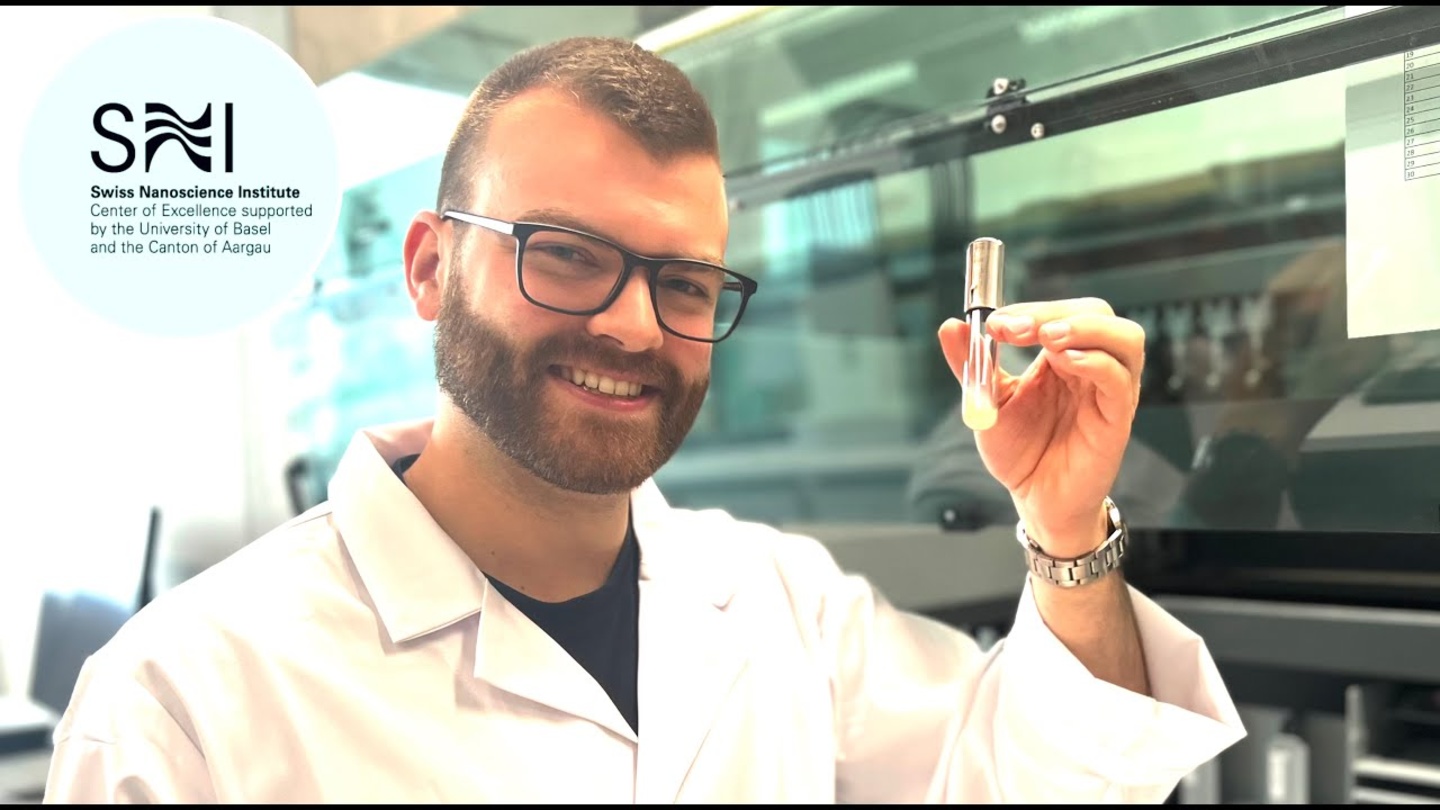
6 Structure of the master’s degree program To successfully complete the Master of Science in Nanosciences, you will need to obtain 90 credit points (CPs). You will receive 16 CPs for attending seminars and lectures in your major subject and 14 CPs for courses in your minor subject. In general, the lectures in the master’s program are given in English. For the two projects in your major and minor subjects, which take about two months each, you will obtain 20 CPs. For the master’s thesis, which is completed over a period of about six months, you will receive 30 CPs and a further 10 CPs for the final oral examination/presentation. Every year, a CHF 2,000 prize is awarded to the best master’s thesis. “I wrote my master’s thesis about synthetic proteins that could one day play a role in colorectal cancer diagnostics.” Raphael Pauli, winner of the prize for the best master’s thesis (2026) “In my master’s thesis, I developed a screening method to test whether biotechnologically produced proteins are suitable for diagnostic tests.” Katja Ammann, winner of the prize for the best master’s thesis (2025)
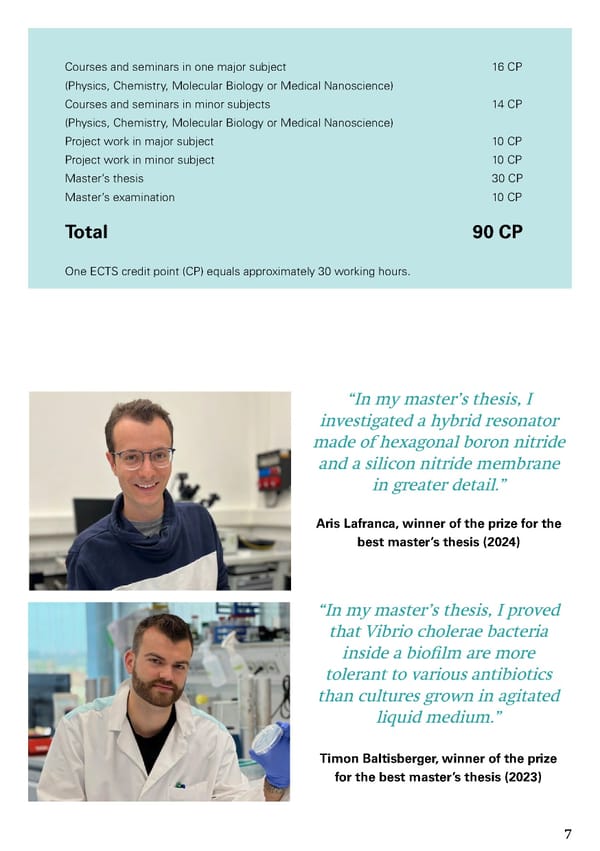
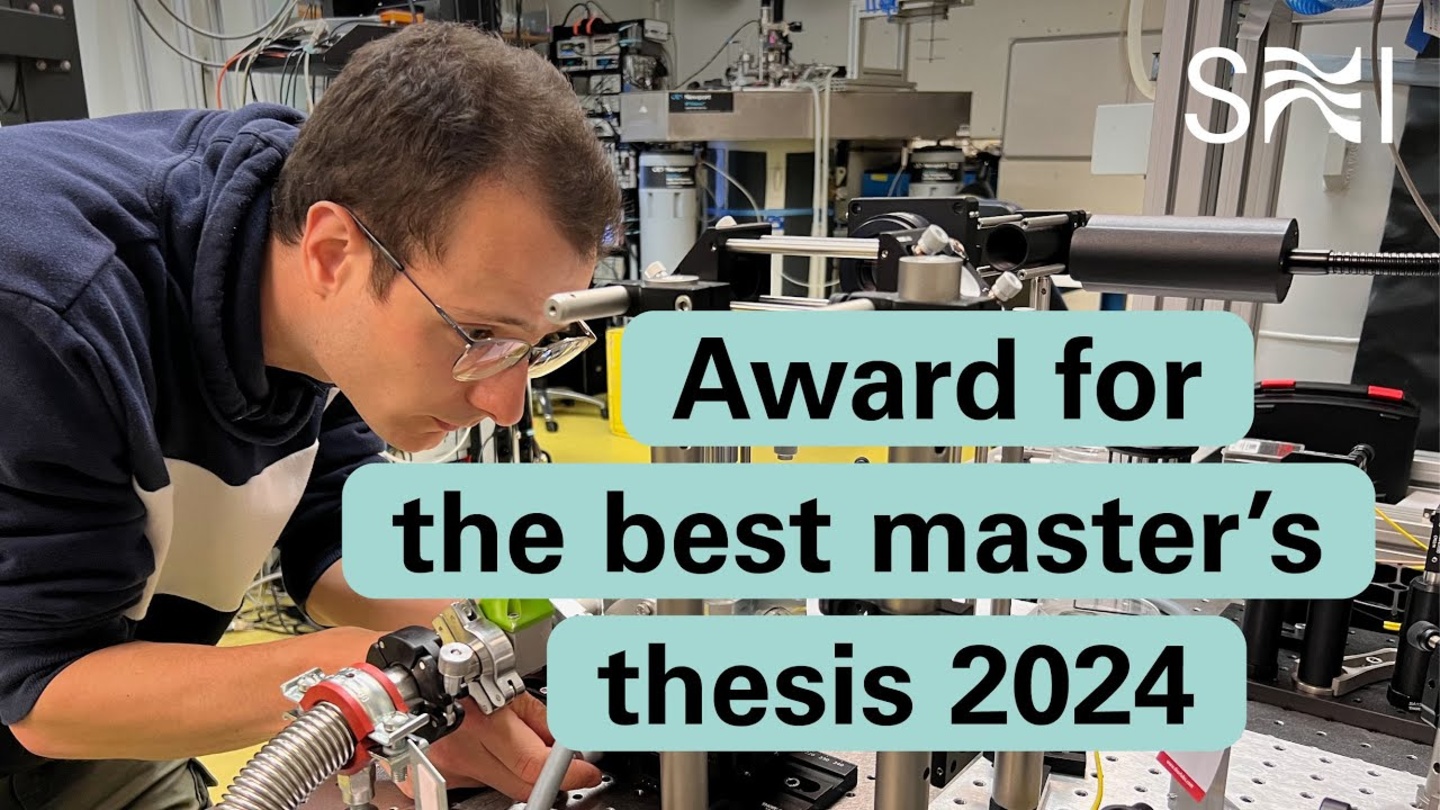
7 Courses and seminars in one major subject 16 CP (Physics, Chemistry, Molecular Biology or Medical Nanoscience) Courses and seminars in minor subjects 14 CP (Physics, Chemistry, Molecular Biology or Medical Nanoscience) Project work in major subject 10 CP Project work in minor subject 10 CP Master’s thesis 30 CP Master’s examination 10 CP Total 90 CP One ECTS credit point (CP) equals approximately 30 working hours. “In my master’s thesis, I investigated a hybrid resonator made of hexagonal boron nitride and a silicon nitride membrane in greater detail.” Aris Lafranca, winner of the prize for the best master’s thesis (2024) “In my master’s thesis, I proved that Vibrio cholerae bacteria inside a biofilm are more tolerant to various antibiotics than cultures grown in agitated liquid medium.” Timon Baltisberger, winner of the prize for the best master’s thesis (2023)
8 A microfluidic system is used to grow nerve cells that simulate an im- portant signal pathway in the brain. This pathway is damaged in patients who suffer from Parkinson’s disease. In his master’s thesis at the Technical University of Denmark, Sebastian Buch- mann worked on the development of one example of a two-dimensional brain model on a chip. It’s all about science Scanning probe microscopes can be used to image surfaces in atomic resolution. In his master’s thesis at the Department of Physics, University of Basel, Sebastian Scherb investigated whether the electro- spray method is suitable for depositing large molecules on surfaces without destroying the molecules in the process. Using nitrogen-vacancy (NV) centers in diamonds, it’s possible to detect the magnetic fields of tiny magnetic particles in liquids. Gabriel Zihlmann used NV centers to image bacteria for his master’s thesis at the University of California, Santa Barbara (USA).
9 Individual circulating tumor cells can be detected in a microfluidic system. Till Ryser worked on the development of this type of detection system as part of his master’s thesis at the Department of Biomedicine, University of Basel. A variety of electrolytes are being studied with a view to investigat- ing new types of cost-effective and environmentally friendly lithium-ion batteries. For her master’s thesis at Empa and the Department of Physics, University of Basel, Camilla Vael studied a range of mixtures and salts for this application. Polymeric nanomaterials might once be used for DNA delivery in gene therapies. In his master`s thesis at the Department of Pharmaceutical Sciences and the Bio- zentrum, University of Basel, Matej Siketanc studied polymeric nanoma- terials for DNA delivery. He applied a biomimetic approach to increase the transfection efficiency of this non-viral gene delivery system.
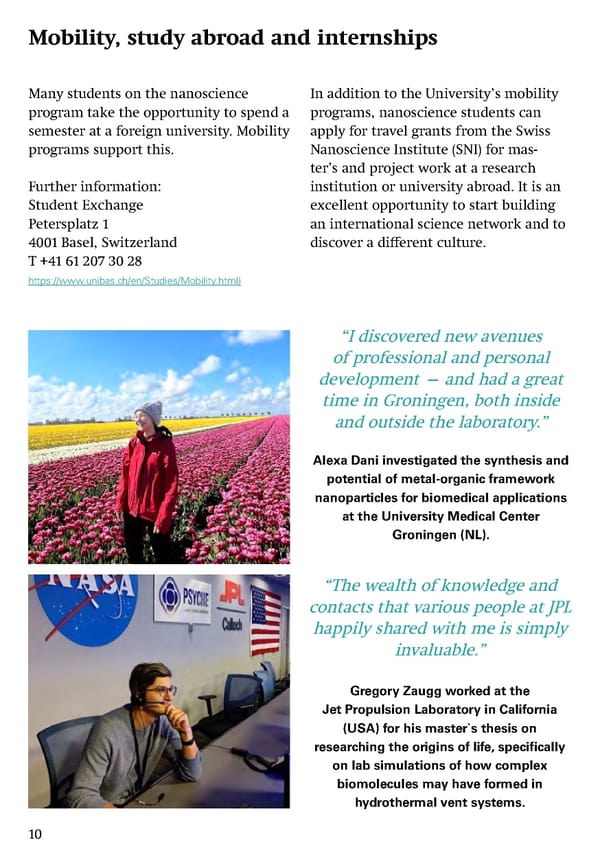
10 Many students on the nanoscience program take the opportunity to spend a semester at a foreign university. Mobility programs support this. Further information: Student Exchange Petersplatz 1 4001 Basel, Switzerland T +41 61 207 30 28 https://www.unibas.ch/en/Studies/Mobility.html) Mobility, study abroad and internships In addition to the University’s mobility programs, nanoscience students can apply for travel grants from the Swiss Nanoscience Institute (SNI) for mas- ter’s and project work at a research institution or university abroad. It is an excellent opportunity to start building an international science network and to discover a different culture. “I discovered new avenues of professional and personal development — and had a great time in Groningen, both inside and outside the laboratory.” Alexa Dani investigated the synthesis and potential of metal-organic framework nanoparticles for biomedical applications at the University Medical Center Groningen (NL). “The wealth of knowledge and contacts that various people at JPL happily shared with me is simply invaluable.” Gregory Zaugg worked at the Jet Propulsion Laboratory in California (USA) for his master`s thesis on researching the origins of life, specifically on lab simulations of how complex biomolecules may have formed in hydrothermal vent systems.
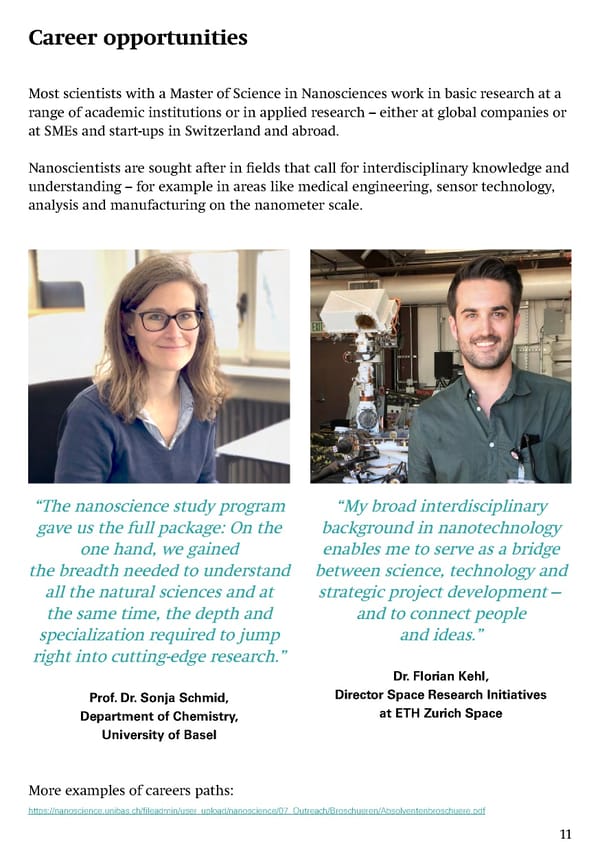
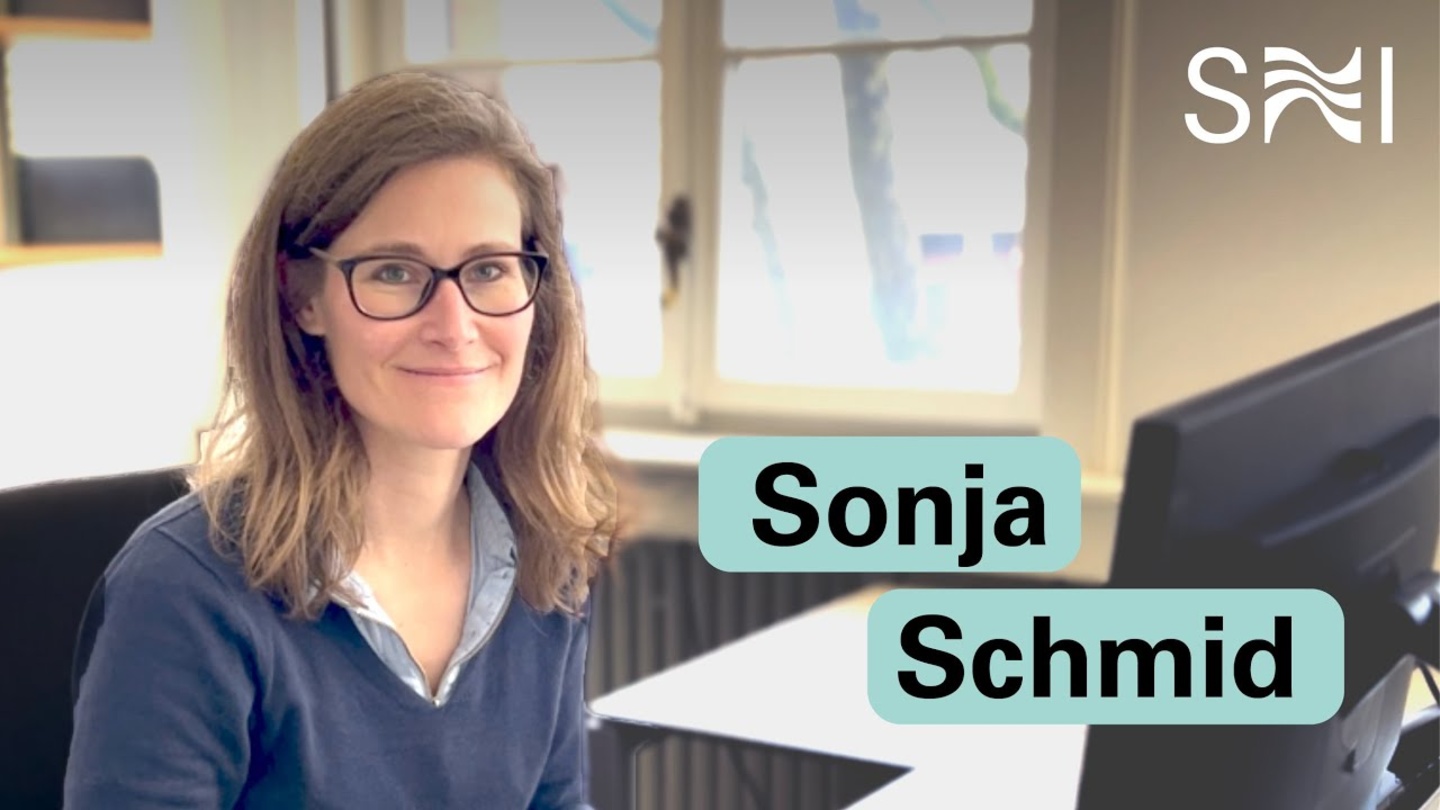
11 Career opportunities More examples of careers paths: https://nanoscience.unibas.ch/fileadmin/user_upload/nanoscience/07_Outreach/Broschueren/Absolventenbroschuere.pdf “The nanoscience study program gave us the full package: On the one hand, we gained the breadth needed to understand all the natural sciences and at the same time, the depth and specialization required to jump right into cutting-edge research.” Prof. Dr. Sonja Schmid, Department of Chemistry, University of Basel “My broad interdisciplinary background in nanotechnology enables me to serve as a bridge between science, technology and strategic project development— and to connect people and ideas.” Dr. Florian Kehl, Director Space Research Initiatives at ETH Zurich Space Most scientists with a Master of Science in Nanosciences work in basic research at a range of academic institutions or in applied research – either at global companies or at SMEs and start-ups in Switzerland and abroad. Nanoscientists are sought after in fields that call for interdisciplinary knowledge and understanding – for example in areas like medical engineering, sensor technology, analysis and manufacturing on the nanometer scale.
12 Admission Direct admission to the master’s program is possible if you hold a bachelor’s degree in nanosciences from the University of Basel or with the proof of equivalent academ- ic achievements. After registering with the Student Administration Office, the relevant board will review your application documents. If you hold a bachelor’s degree from a different university or in a subject other than nanosciences, the Faculty responsible may only partially recognize it as equivalent. In this case, admission to the master’s program may require the appli- cant to obtain further credits (up to a maximum of 60 credits) from the bachelor’s degree program in nanoscience. For further information on admission requirements, please visit: https://www.unibas.ch/en/Studies/Application-Admission/Admission.html Registration & matriculation You will get information on how to register for the master’s program after you have received the confirmation of admission. Registration is available at: http://www.unibas.ch/registration. The deadline for registration for the fall semester is 30 April, for the spring semester 30 November. The registration fee is CHF 100. The master’s program usually starts in the fall semester and lasts three semesters, without a time limit. Study costs Tuition fees per semester (also for examination semester) are CHF 850. This does not include personal living costs. If you would like to apply for scholar- ships and student loans, please send your application to the scholarship department of the canton where your parents legally reside.
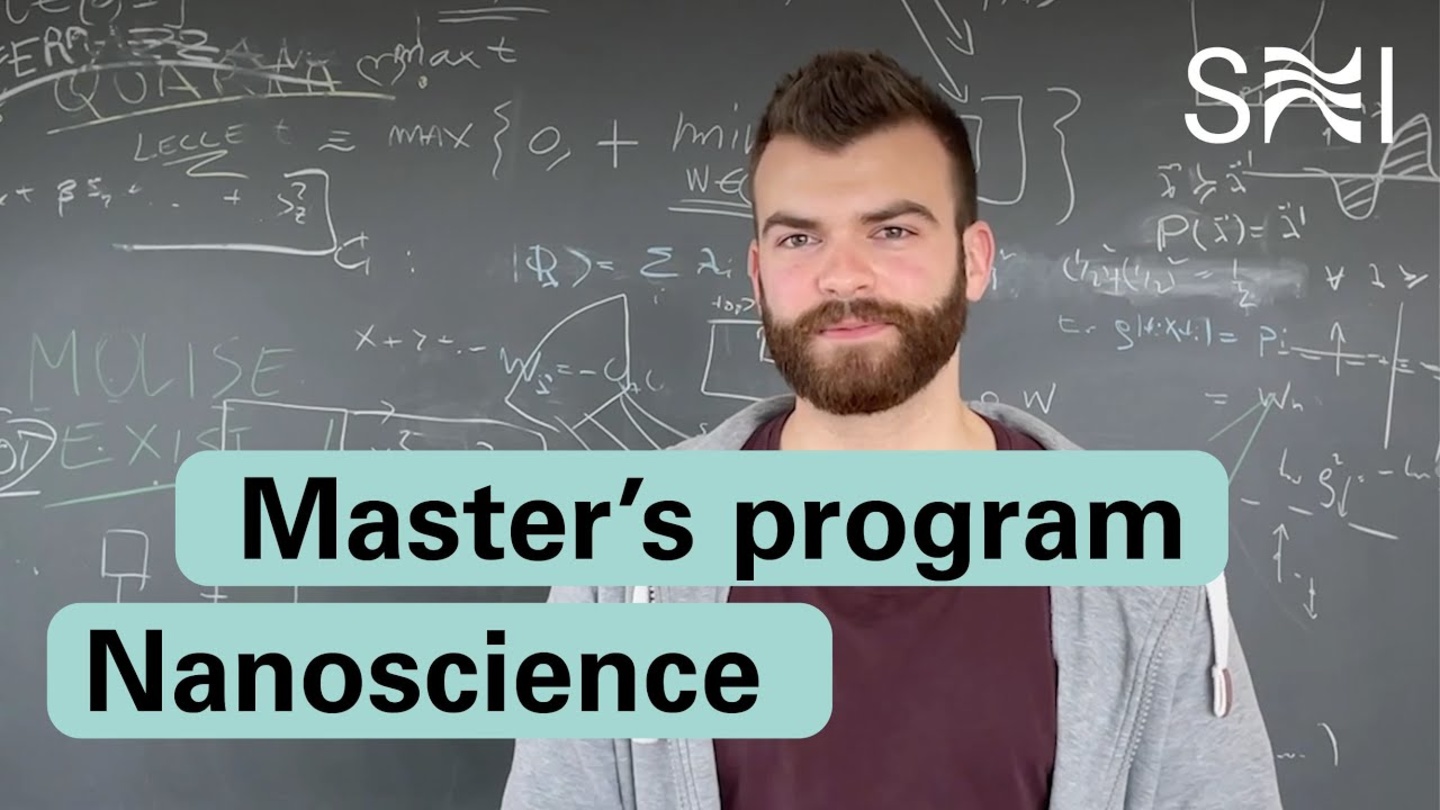
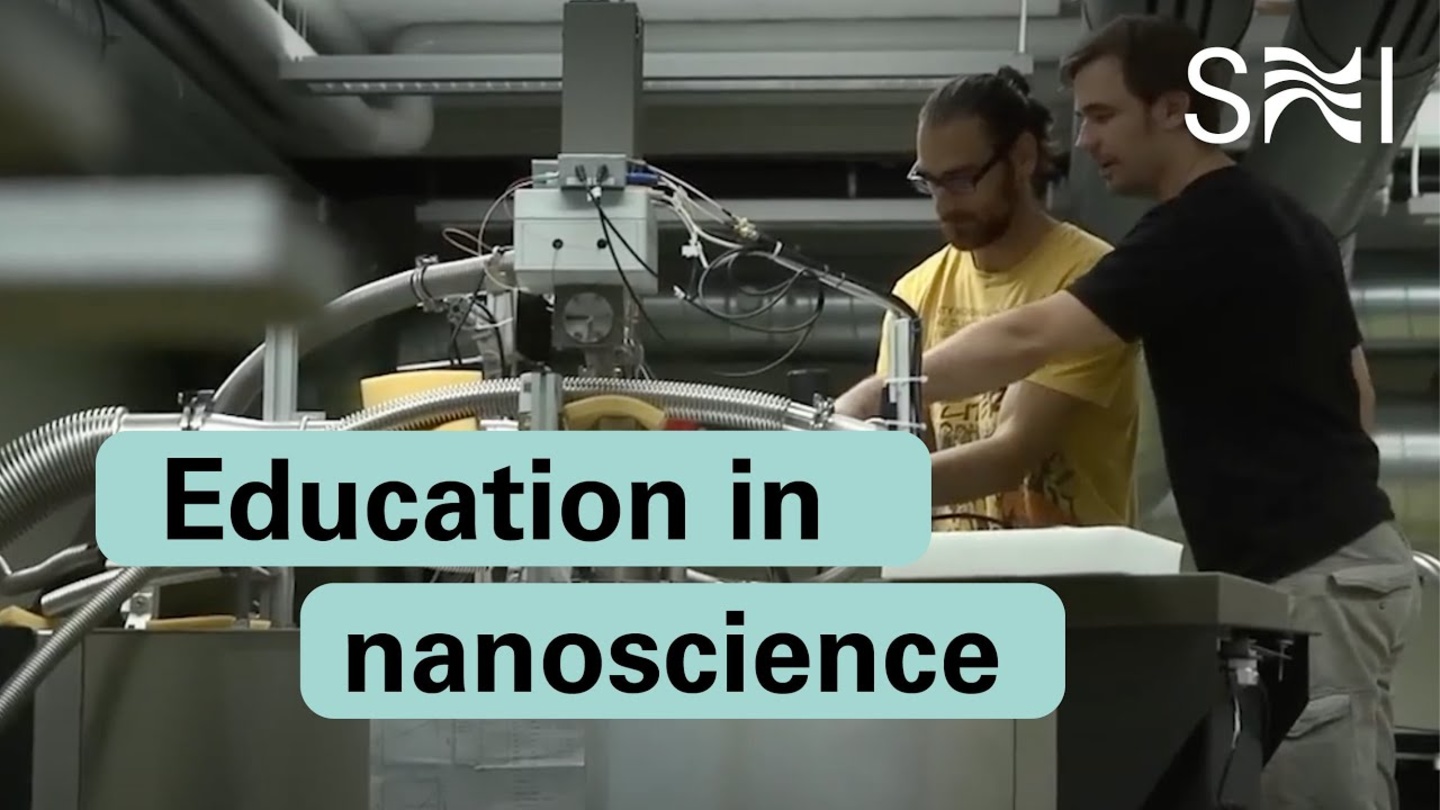
13 Further information You will find more information on our website: https://nanoscience.ch/en/studium/ Nanoscience students in the master`s program talk about their experience and what they like best: https://youtu.be/C1ADIeKXqbU On YouTube, you will find more infor- mation about the Swiss Nanoscience Institute (founded by the Canton of Aargau and the University of Basel), na- noscience education, SNI members and their research under the keyword “Swiss Nanoscience Institute”. https://youtu.be/B_nkPd84ufU
Nano study coordination and student advice Klingenbergstrasse 80 4056 Basel Switzerland studienkoordination-nano@unibas.ch Dr. Anja Car Simone Chambers +41 61 207 59 95 + 41 61 207 37 98 We look forward to welcoming you to the master’s degree program in nanoscience. Please contact us with any question!
Concept, text and layout: A. Car and C. Möller Translation: uniworks (Erlangen, Germany) Print: Publikation Digital, Biel, Switzerland © Swiss Nanoscience Institute, August 2026 Images Cover: Gabriel Eisler works at an scanning probe microscope (C. Möller) Page 2: Self-assembly of HCB molecules on Au(111) (R. Pawlak) Page 3: Vera Weibel (C. Möller) Page 4: Manuel Kraus (C. Möller) Page 5: Mathias Claus and Philippe Van der Stappen in their labs (C. Möller) Page 6: Raphael Pauli and Katja Ammann at BÜHLMANN Laboratories (C. Möller) Page 7: Aris Lafranca and Timon Baltisberger in their labs (C. Möller) Page 8: AFM image of Spoked Wheel molecules on potassium bromide (S. Scherb) Microfluidic system that can be used as a brain model (S. Buchmann) Experimental setup to study magnetic fields in liquids (G. Zihlmann) Page 9: Microfluidic system that is used to detect circulating tumor cells (T. Ryser) SEM image of a cathode after charge-discharge cycling with electrolytes (C. Vael) Crosssection of a 3D model of cells (M. Siketanc) Page 10: Alexa Dani in the Netherlands (A. Dani) and Gregory Zaugg in the mission control room at JPL (G. Zaugg) Page 11: Sonja Schmid (C. Möller) and Florian Kehl at the NASA Jet Propulsion Laboratory (F. Kehl) Page 13: Anja Car and Simone Chambers are here to support you during your studies (C. Möller)
University of Basel Petersplatz 1 P .O. Box 2148 4001 Basel Switzerland www.unibas.ch Educating Talents since 1460. Swiss Nanoscience Institute Universität Basel Klingelbergstrasse 82 4056 Basel Switzerland www.nanoscience.ch