
SNI Insight December 2025
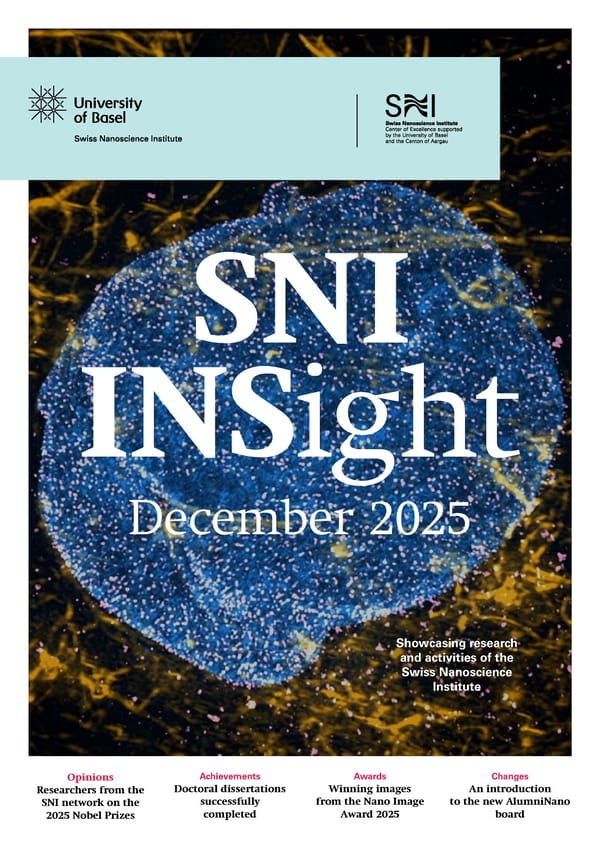
A publication showcasing research and activities at the Swiss Nanoscience Institute, including discussions on Nobel Prizes, doctoral achievements, award-winning images, and AlumniNano board introductions.
Achievements Doctoral dissertations successfully completed Changes An introduction to the new AlumniNano board Awards Winning images from the Nano Image Award 2025 Opinions Researchers from the SNI network on the 2025 Nobel Prizes SNI INSight December 2025 Showcasing research and activities of the Swiss Nanoscience Institute
3 Editorial 4 Significance of the 2025 Nobel Prize in Chemistry Interview with Jonathan de Roo on metal-organic frameworks (MOFs) 7 Significance of the 2025 Nobel Prize in Physics An interview with Christoph Bruder and Andrea Hofmann on quantum mechanics in macroscopic systems 10 Science meets aesthetics A winning image from the Nano Image Award 2025 12 Using light to study the collective behavior of electrons Portrait of Tomasz Smoleński 15 Funding of SNI members 17 Successful defenses of doctoral dissertations 22 Science meets aesthetics A winning image from the Nano Image Award 2025 24 20 years since the first bachelor’s degree A good reason to look back and celebrate 25 Exciting career paths after study- ing nanoscience New brochure 26 New boards in the nano student association and AlumniNano 27 Guest article by the AlumniNano board How does it continue? 28 Science meets aesthetics A winning image from the Nano Image Award 2025 30 Nano.Neugier Ideas for experiments and craft projects 32 News from the SNI network www.nanoscience.ch Follow us on: SNI INSight Twice a year, SNI INSight informs you about the Swiss Nanoscience Institute’s activities and results in research, education, technology, knowledge transfer and public relations. Previous issues are available on our website under SNI INSight. 2 SNI INSight December 2025
Dear colleagues and nanoenthusiasts, In our network, the last few months have been a busy time. Numerous doctoral re- searchers from the SNI PhD School have successfully defended their dissertations, and many students have completed their degree programs. They’re now all eligible to join the AlumniNano organization of nanoscience graduates, whose members meet regularly to exchange ideas. This dynamic network offers a great opportu- nity for all members to maintain existing contacts and make new ones — a key ad- vantage for graduates entering a chal- lenging job market. At the end of the year, some new faces joined the board of AlumniNano — and the guest article in this issue of SNI INSight sets out the new board’s plans for the coming months and years. Each fall, the announcement of the Nobel Prizes in Physics, Chemistry and Medicine draw the attention of the scien- tific community. This year, prizes were once again awarded to researchers work- ing in fields that are highly relevant to members of the SNI network. With this in mind, we’ve interviewed SNI research- ers about the Nobel Prize topics in chem- istry and physics. Research within the SNI also extends beyond these topics — as is reflected both in the section on recently awarded funding and in the brief presen- tation of doctoral dissertations that have been completed as part of the SNI PhD School in recent months. SNI events such as the NanoTec Apéro and the Annual Meeting — both of which are held in the second half of the year — offer an opportunity to hear about some of the exciting research being car- ried out within our network. The con- stant influx of new members into our network means that these topics are con- stantly changing and evolving. For exam- ple, with the arrival of Tomasz Smoleński as assistant professor at the Department of Physics — who began setting up his group at the start of the year — our net- work has gained an expert in quantum opto-electronics. As well as a portrait of Smoleński’s research and the aforementioned topics, this SNI INSight also summarizes news items regarding events and publications in recent months. None of these activities in the areas of research, training, public relations and administration would be possible without the work of our dedi- cated staff. I’d like to express my sincere thanks to all of you for your commitment and for your support in achieving our aim of using nanoscience and nanotechnology to benefit society. I look forward to the fresh ideas and inspiring collaborations that next year will bring and wish you all a happy holiday season. Kind regards, Prof. Martino Poggio, SNI director 3 SNI INSight December 2025
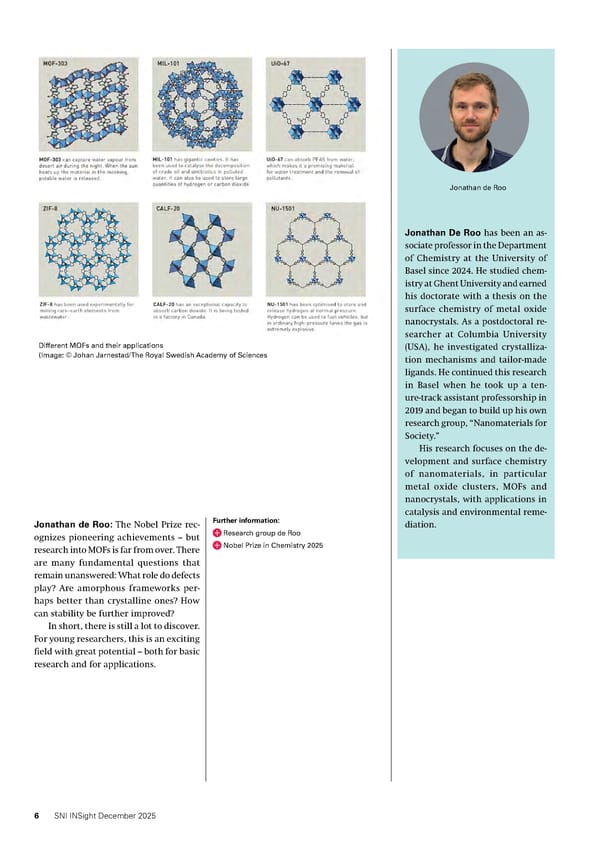
SNI INSight: What was this year’s Nobel Prize in Chemistry awarded for? Jonathan de Roo: The prize was awarded for the development of metal-organic frameworks – crystalline materials con- sisting of metal ions or clusters connected by organic ligands. These structures have countless pores and thus a huge internal surface area. This makes them ideal for storing or separating large quantities of gases or liquids. The exciting thing is that by carefully selecting the metal and ligands, it is pos- sible to control the pore size and thus also the functionality and stability of the MOFs. This so-called reticular chemistry therefore allows for rational design – in contrast to the often random synthesis of Significance of the 2025 Nobel Prize in Chemistry Interview with Jonathan de Roo on metal-organic frame- works (MOFs) On December 10, 2025, the Nobel Prize in Chemistry was awarded in Stockholm to Professors Susumu Kitagawa, Richard Robson and Omar M. Yaghi. The three researchers were honored for their groundbreaking work on metal-organic frameworks (MOFs). These highly porous materials consist of metal ions and organic connecting elements (ligands). Due to their immense inner surface area, they can absorb, store or convert large quantities of gases and liquids – with great potential for many applications. In an interview, Professor Jonathan de Roo from the Department of Chemistry at the University of Basel explains what makes MOFs so fascinating and how his group is con- tributing to this research. traction of gold from seawater is being investigated: although the concentra- tions in seawater are low, this is still in- teresting due to the huge amounts of wa- ter involved. In addition, MOFs can serve as cata- lysts. The molecules to be converted bind to metal ions or functional groups in the pores, are activated, and can then un- dergo chemical conversion. It is import- ant that MOFs then release the product and are regenerated so that they can be reused. There are numerous other applica- tions, as MOFs can be designed to selec- tively absorb only certain molecules and, if necessary, release them again. new materials in the past. For example, a MOF can be specifically developed that separates H2 from CO₂ by adjusting the pores precisely to the size of the smaller hydrogen molecule. SNI INSight: Which applications are particularly promising for MOFs? Jonathan de Roo: The possible applica- tions are extremely diverse. One example that is often cited is collecting water from the air in dry regions – the water is stored in the MOF and can be released again by heating. MOFs are also suitable for removing CO₂ or pollutants from the air or filtering heavy metals from water. Even the ex- 4 SNI INSight December 2025
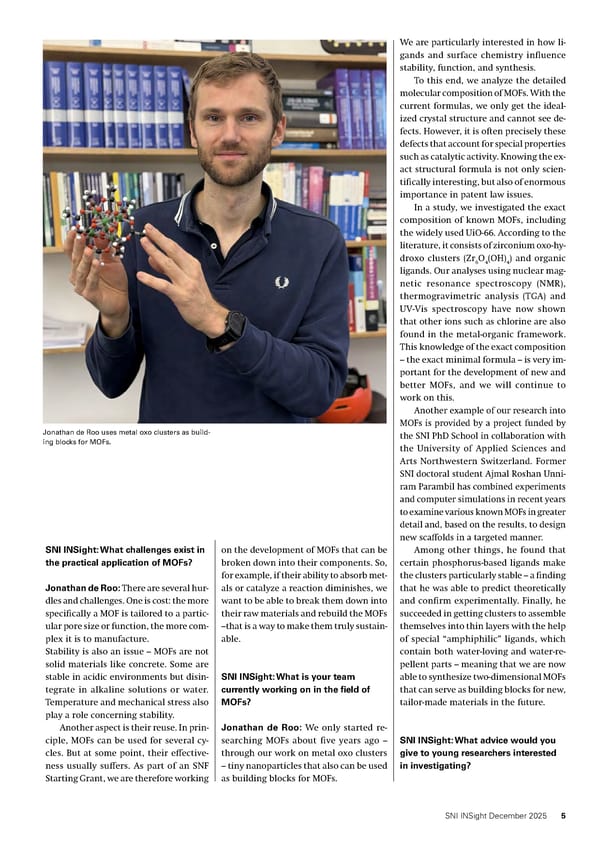
on the development of MOFs that can be broken down into their components. So, for example, if their ability to absorb met- als or catalyze a reaction diminishes, we want to be able to break them down into their raw materials and rebuild the MOFs –that is a way to make them truly sustain- able. SNI INSight: What is your team currently working on in the field of MOFs? Jonathan de Roo: We only started re- searching MOFs about five years ago – through our work on metal oxo clusters – tiny nanoparticles that also can be used as building blocks for MOFs. We are particularly interested in how li- gands and surface chemistry influence stability, function, and synthesis. To this end, we analyze the detailed molecular composition of MOFs. With the current formulas, we only get the ideal- ized crystal structure and cannot see de- fects. However, it is often precisely these defects that account for special properties such as catalytic activity. Knowing the ex- act structural formula is not only scien- tifically interesting, but also of enormous importance in patent law issues. In a study, we investigated the exact composition of known MOFs, including the widely used UiO-66. According to the literature, it consists of zirconium oxo-hy- droxo clusters (Zr6O4(OH)4) and organic ligands. Our analyses using nuclear mag- netic resonance spectroscopy (NMR), thermogravimetric analysis (TGA) and UV-Vis spectroscopy have now shown that other ions such as chlorine are also found in the metal-organic framework. This knowledge of the exact composition – the exact minimal formula – is very im- portant for the development of new and better MOFs, and we will continue to work on this. Another example of our research into MOFs is provided by a project funded by the SNI PhD School in collaboration with the University of Applied Sciences and Arts Northwestern Switzerland. Former SNI doctoral student Ajmal Roshan Unni- ram Parambil has combined experiments and computer simulations in recent years to examine various known MOFs in greater detail and, based on the results, to design new scaffolds in a targeted manner. Among other things, he found that certain phosphorus-based ligands make the clusters particularly stable – a finding that he was able to predict theoretically and confirm experimentally. Finally, he succeeded in getting clusters to assemble themselves into thin layers with the help of special “amphiphilic” ligands, which contain both water-loving and water-re- pellent parts – meaning that we are now able to synthesize two-dimensional MOFs that can serve as building blocks for new, tailor-made materials in the future. SNI INSight: What advice would you give to young researchers interested in investigating? SNI INSight: What challenges exist in the practical application of MOFs? Jonathan de Roo: There are several hur- dles and challenges. One is cost: the more specifically a MOF is tailored to a partic- ular pore size or function, the more com- plex it is to manufacture. Stability is also an issue – MOFs are not solid materials like concrete. Some are stable in acidic environments but disin- tegrate in alkaline solutions or water. Temperature and mechanical stress also play a role concerning stability. Another aspect is their reuse. In prin- ciple, MOFs can be used for several cy- cles. But at some point, their effective- ness usually suffers. As part of an SNF Starting Grant, we are therefore working Jonathan de Roo uses metal oxo clusters as build- ing blocks for MOFs. 5 SNI INSight December 2025
Jonathan de Roo: The Nobel Prize rec- ognizes pioneering achievements – but research into MOFs is far from over. There are many fundamental questions that remain unanswered: What role do defects play? Are amorphous frameworks per- haps better than crystalline ones? How can stability be further improved? In short, there is still a lot to discover. For young researchers, this is an exciting field with great potential – both for basic research and for applications. Jonathan De Roo has been an as- sociate professor in the Department of Chemistry at the University of Basel since 2024. He studied chem- istry at Ghent University and earned his doctorate with a thesis on the surface chemistry of metal oxide nanocrystals. As a postdoctoral re- searcher at Columbia University (USA), he investigated crystalliza- tion mechanisms and tailor-made ligands. He continued this research in Basel when he took up a ten- ure-track assistant professorship in 2019 and began to build up his own research group, “Nanomaterials for Society.” His research focuses on the de- velopment and surface chemistry of nanomaterials, in particular metal oxide clusters, MOFs and nanocrystals, with applications in catalysis and environmental reme- diation. Different MOFs and their applications (Image: © Johan Jarnestad/The Royal Swedish Academy of Sciences Jonathan de Roo Further information: Research group de Roo Nobel Prize in Chemistry 2025 6 SNI INSight December 2025
Significance of the 2025 Nobel Prize in Physics An interview with Christoph Bruder and Andrea Hofmann on quantum mechanics in ma- croscopic systems On 10 December, 2025, the Nobel Prize in Physics was awarded to Professor John Clarke, Professor Michel H. Devoret and Professor John M. Martinis for their discovery of macroscopic quantum mechanical tunneling and energy quantization in an electric circuit. Their experiments show that quantum effects play a role not only in the nano and micro- world but also in larger, macroscopic systems. Professor Christoph Bruder and Professor Andrea Hofmann from the Department of Physics discuss this groundbreaking research in an interview. SNI INSight: What exactly have the three researchers been awarded the Nobel Prize for? Christoph Bruder: Back in the 1980s, Clarke, Devoret and Martinis carried out experiments proving that a circuit con- sisting of superconducting components shows quantum mechanical effects — de- spite being a large system involving many particles. At the time when these experiments were performed, scientists had already known about the phenomenon of quan- tum tunneling for some time. They had observed that individual quantum parti- cles can pass through an insulating bar- rier — in a manner that completely con- tradicts our experience of the mac- roworld. In other words, if we throw a ball against a wall, it bounces back and doesn’t suddenly appear on the other side. It remained unclear, however, whether this phenomenon could also ap- pear in the macroscopic world — and up to which point quantum effects come into play. Through their experiments, the three researchers who have now been awarded the Nobel Prize showed that this tunnel- ing effect could also be observed in a mac- roscopic system. SNI INSight: How did they do it? Christoph Bruder: Clarke, Devoret and Martinis used a circuit made up of two superconductors separated by a thin, in- sulating barrier to create “Josephson junctions.” The particles then tunneled through the insulating barrier. This was only possible, however, because the re- searchers cooled the system down to a very low temperature and, above all, be- cause they shielded it very efficiently. In- tended to prevent the effects from being masked by outside interference, this pre- sented a significant technical challenge. In their experiments, the researchers were able to show that all the charged particles in the superconductor exhibited uniform behavior. To put it simply, the system has two states: one in which cur- rent flows without a voltage, and another in which a voltage appears when a current flows. The experiments showed that all particles tunneled collectively between these two states despite the barrier. The researchers also demonstrated that the system is quantized, which means that it can only absorb and emit specific amounts of energy. SNI INSight: What’s so special about that? Christoph Bruder: In larger, macroscopic systems, quantum mechanical effects are often destroyed due to heat or interac- tions with the environment — and it is 7 SNI INSight December 2025
difficult to shield macroscopic systems so thoroughly that the quantum effects are not drowned out by outside influences. That is precisely what the three Nobel laureates achieved, showing for the first time experimentally that even large sys- tems can operate according to the rules of quantum mechanics. These results meant that work could begin on building specific macroscopic quantum systems and developing new fields of technology such as quantum computing, quantum sensors or quantum communication — which also play a key role in the SNI network. SNI INSight: How important for your research are the described findings? Andrea Hofmann: Such Josephson junctions, in which mac- roscopic tunneling was observed, are the foundation of our research. We use the junctions to build quantum bits — like bits for classical computers, but with quantum properties — by exploiting the fact that the quantum properties are maintained during tunneling. Another interesting feature of these junctions is their non-linearity. While conventional inductors are linear, Josephson junctions make it relatively easy to build non-lin- ear electronic components. For example, this is of interest when it comes to producing highly sensitive amplifiers. Christoph Bruder previously conducted intensive research into Josephson con- tacts. These special contacts form the basis for Andrea Hofmann’s research. 8 SNI INSight December 2025
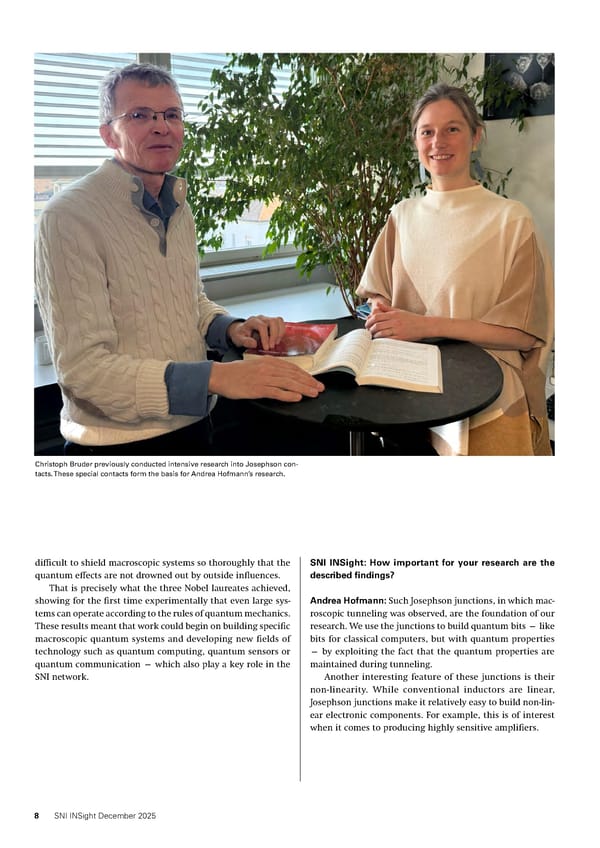
Christoph Bruder is Professor of Theoretical Physics at the Department of Physics of the University of Basel. He has been an active member of our interdisciplinary network since the SNI was founded and represents the Department of Physics in the Teaching Committee for the nanoscience program. Following his doctorate at ETH Zurich and a postdoc in the USA, Christoph Bruder began working on Josephson junctions and quantum transport at Karlsruhe Institute of Technology (KIT) in the early 1990s. Since 1998, he has been a professor at the University of Basel, carrying out research into the theoretical principles behind quantum effects in mesoscopic systems — such as the coupling of tiny mechan- ical resonators with light or an electric current, as well as systems consisting of a few superconducting qubits. The aim of this work is to gain a better understanding of transport on the nanoscale, the development of ultrasensitive mea- surement techniques, the investigation of synchronization phenomena in the quantum realm, and applications of ma- chine learning in physics. Further information Research group Christoph Bruder Research group Andrea Hofmann Nobel Prize in Physics 2025 Andrea Hofmann is Assistant Professor at the Department of Physics of the University of Basel and leads the Quantum Electronic Devices research group. She completed her studies and doctorate at ETH Zurich before undertaking a postdoc at the Institute of Science and Technology Austria (IST Austria) as part of a Marie Curie Indi- vidual Fellowship. She then worked as a risk modeler at Swiss Re in Zurich. Since October 2021, Andrea Hofmann has led her own research group at the University of Basel, specializing in trans- port measurements in semiconductor nanostructures at low temperatures. SNI INSight: Can you describe your approaches in more detail? Andrea Hofmann: Broadly speaking, we explore how the tunneling effect changes depending on the properties of the tunneling barrier. To put it more precisely, we investigate the microscopic states that allow pairs of particles to be ex- changed between the two superconductors without losing their quantum mechanical properties. These microscopic states depend on the properties of the barrier. Accordingly, we’re now building barriers from semiconductors such as germanium, allowing us to measure the material’s specific properties. We can then use this knowledge to build ampli- fiers and quantum bits from our superconductor-germani- um-superconductor junctions. In another experiment, we’re attempting to lock individ- ual particles known as “holes” (missing electrons) inside small cages (quantum dots) in germanium. Our aim is to exploit the quantum mechanical properties of these individ- ual holes to create quantum bits. Superconductors play a key role here, because we use them to build very sensitive detec- tors (resonators) that we can use to read out the quantum bits. We also work with graphene bilayers — that is, with a double layer of atomically thin carbon “sheets,” in which we use elec- tric fields to create quantum dots and tunnel barriers. These structures offer a particularly clean and versatile platform for researching new types of quantum bits and quantum transport phenomena. We carry out all of these experiments at extremely low tem- peratures — often just a few thousandths of a degree above absolute zero — because the sensitive quantum effects would otherwise be destroyed by thermal motion. Christoph Bruder (Image: Department of Physics, University of Basel Andrea Hofmann (Image: University of Basel, F. Moritz) 9 SNI INSight December 2025
10 SNI INSight December 2025
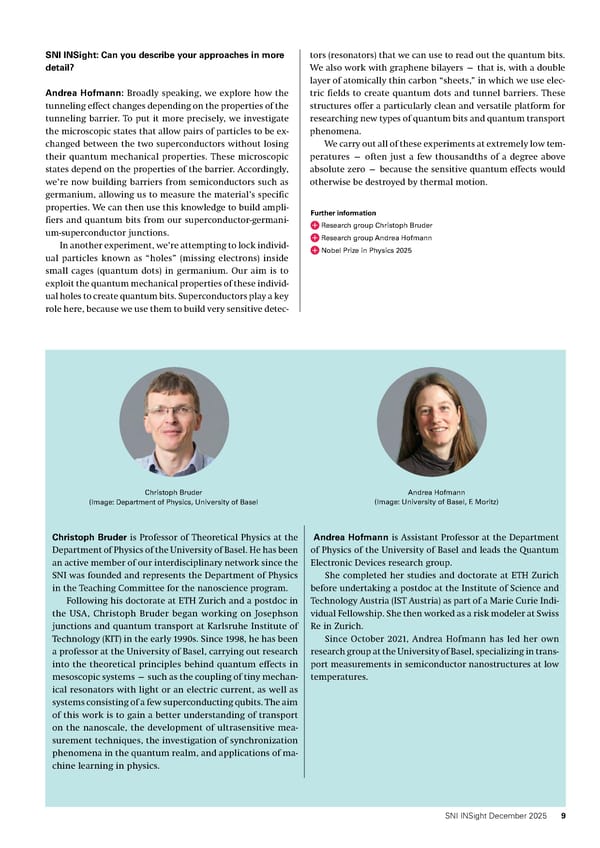
Science meets aesthetics Once a year, we select the most beautiful images from the micro and nanoworld as part of the Nano Image Awards. The images we receive always provide fascinating insights into the world of tiny structures and combine creativity and research to deliver beautiful and impressive results. Alina Dokgöz and Sina Saxer (FHNW) submitted this colorized winning image, entitled “Woolcium Micro- particles”. The image shows calcium carbonate microparticles, synthesized by precipitation from calcium chloride and ammonium carbonate solutions. The other prizewinning images can be found on pages 22 and 28. 11 SNI INSight December 2025
Using light to study the collective behavior of electrons Professor Tomasz Smoleński is a new member of the SNI network. Since the beginning of February 2025, he has been carrying out research as an assistant professor at the Department of Physics of the University of Basel as a successor to our former director, Professor Christian Schönenberger. Smoleński is passionate about studying the collective behavior of electrons in 2D materials. Together with his growing team, he investigates these phenomena using light, including with a view to applications in quantum technologies. The behavior of numerous electrons Quantum Opto-Electronics is the name of the group led by Tomasz Smoleński, the new assistant professor at Basel Universi- ty’s Department of Physics, who will also supervise a project at the SNI PhD School from 2026 onward. In simple terms, he and his team are investigating how large numbers of elec- trons behave in different phases and ma- terials. Smoleński compares this topic to a flock of birds moving in a complex pat- tern, unlike that of the individual bird. “The complex movement pattern arises not because each bird tracks the entire flock, but rather from simple rules — each bird merely responds to the behav- ior of its neighbors. A similar principle applies to electrons when many of them come together,” Smoleński explains. Electrons also exhibit collective be- havior that can be very complex — such as in a superconductor, which conducts electricity losslessly. However, this collec- tive behavior is often difficult to predict and calculate. Smoleński is therefore in- vestigating it using optical, noninvasive methods. Artificial materials with new properties Smoleński and his team use two-dimen- sional van der Waals heterostructures for their research. These structures consist of layers of atomically thin materials held together by weak van der Waals forces. This property enables different atomic layers to be combined in complex hetero- structures that can exhibit entirely new electronic properties. “Van der Waals heterostructures pro- vide us with an almost infinite number of new materials that offer an ideal plat- form for our investigations,” Smoleński explains. “One unique advantage of these materials is that they allow the number Network of electrons to be tuned in situ by apply- ing a voltage without having to change the material.” This tunability of their properties distinguishes the materials from others used in quantum science and is of great importance to the re- searchers. Investigations with light To study the properties of electrons in these heterostructures, Smoleński em- ploys various spectroscopic — that is, optical — methods that do not alter the material itself. In simple terms, he shines lasers onto layered structures hosting electronic phases and analyzes spectral properties of the reflected light that encode collec- tive properties of the electrons. By using a combination of optical methods, he can map the electronic states, also known as quantum phases, in terms of space, time and energy. Smoleński explains: “This 12 SNI INSight December 2025
Tomasz Smoleński heads the Quantum Opto-Electronics Group at the Department of Physics at the University of Basel and has recently joined the SNI network as supervisor of an SNI PhD School project. research enables us to answer open fun- damental questions regarding the phys- ics of condensed matter and opens up new prospects for quantum technologies and quantum computing.” First grants and collaborations The topical nature of this research is demonstrated by, among other things, the fact that Smoleński was recently awarded an ERC Starting Grant. This will help him further expand his group and establish a quantum optoelectronics branch of research at the Department of Physics. “The start was definitely very good,” reports Smoleński. After just two months in Basel, he was able to begin the first experiments. “One laboratory had al- ready been renovated, and I was able to take over some equipment from my pre- decessor, Christian Schönenberger. To- gether with my team of four, I’m now setting up more laboratories. And we’ve already started some collaborations with colleagues.” This is exactly what Smoleński had hoped for when he applied to Basel, as he was particularly attracted to the diversity of research groups that were closely linked to his topics. “Basel offers me a unique collaborative environment,” he says. For example, he is working with Pro- fessor Martino Poggio through the SNI PhD School. A project was approved for this program in the last call. The research- ers plan to develop a unique new plat- form combining optical spectroscopy from Smoleński’s team and SQUID-on-tip (SOT) magnetometry from the Poggio Lab. This combination will enable researchers to study physical phenomena, such as to- pological phases and light-induced ferro- magnetic materials, with unparalleled sensitivity. In a collaboration recently launched with Professor Patrick Maletinsky’s team, the researchers intend to use NV magnetom- etry to study the impact of optical exci- tations on domain walls. The joint use of equipment that is currently lacking in Smoleński’s laboratory is also working very well. “We are currently installing a fiber optic cable between our lab and Richard Warburton’s so that we can use his detectors,” he says, giving another ex- ample of good cooperation. Settling in well Smoleński already feels at home in Basel. He enjoys its manageable size, which al- lows him to cycle back home from uni- versity in just five minutes to see his one- year-old son. He has been getting to know and love Switzerland for several years now. From 2018 to the beginning of 2025, he was a postdoc at the Department of Physics of 13 SNI INSight December 2025
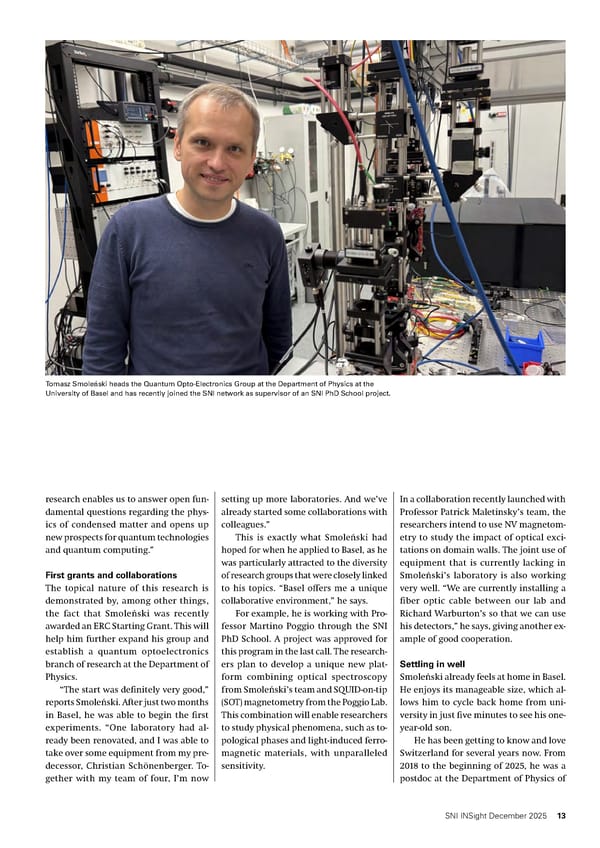
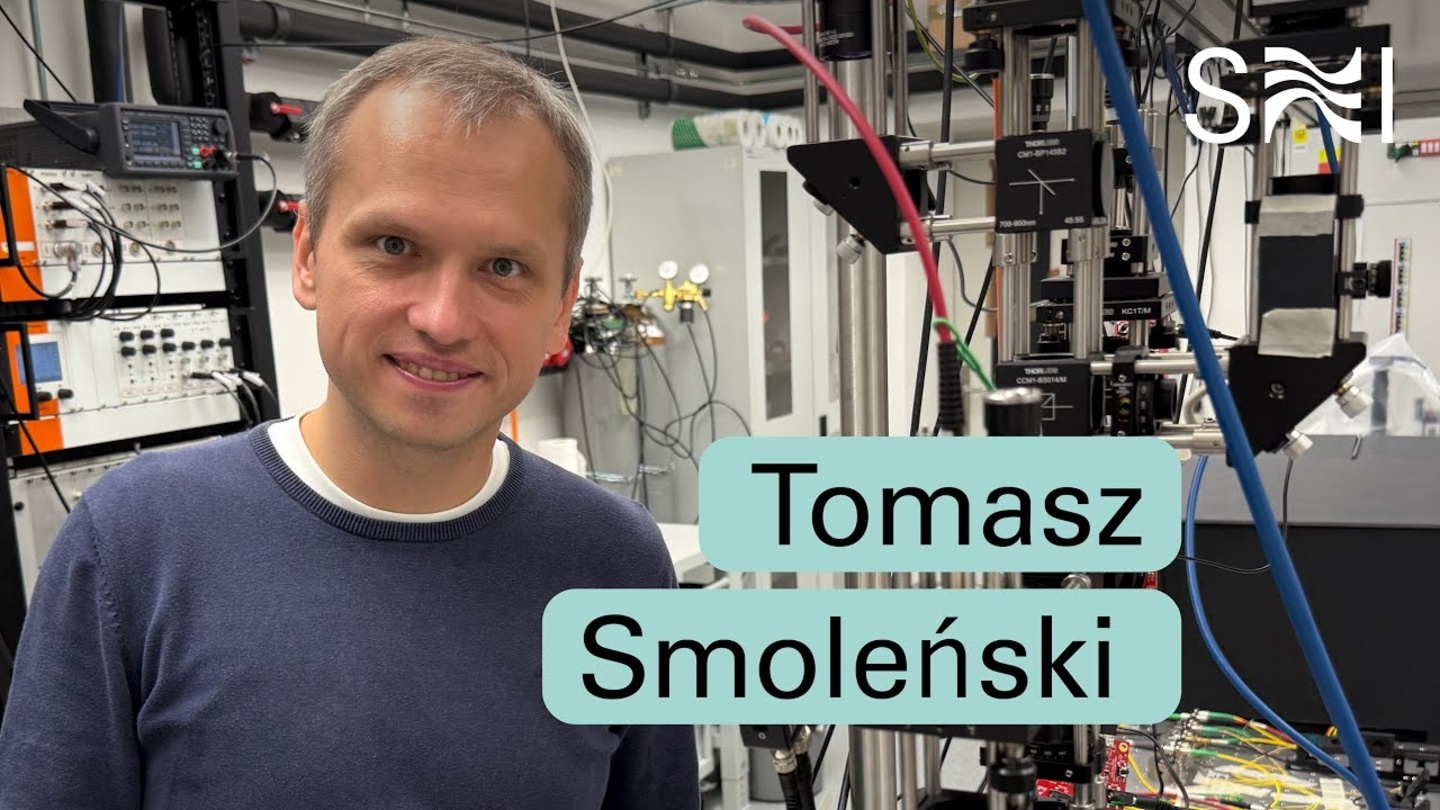
ETH Zurich, where he focused on developing novel optical quantum sensors to detect and visualize strongly correlated electronic phases in van der Waals heterostructures. He began his scientific ca- reer at the University of Warsaw, where he studied computer science and physics and completed his doctoral dissertation on the spectroscopy of quan- tum dots in 2018. Smoleński considers it a great privilege to now be working as an assistant professor in this inspiring environment in Basel. The numerous tasks he per- forms, such as planning the laboratory, ordering equipment, training students and collaborating with other researchers, mean there is never a dull mo- ment. “In addition, the scientific issues we deal with are very exciting and of interest to many people,” he says when asked what inspires him. “With our re- search, we contribute to the understanding of the world at the nanoscale.” Further information: Video with Tomasz Smoleński Research group Tomasz Smoleński “Van der Waals heterostructures provide us with an almost infinite number of new materials that offer an ideal platform for our investigations.“ Prof. Tomaz Smoleński Tomasz Smoleński and his team work with Van der Waals heterostructures, which consist of a few atomic layers of different materials. 14 SNI INSight December 2025
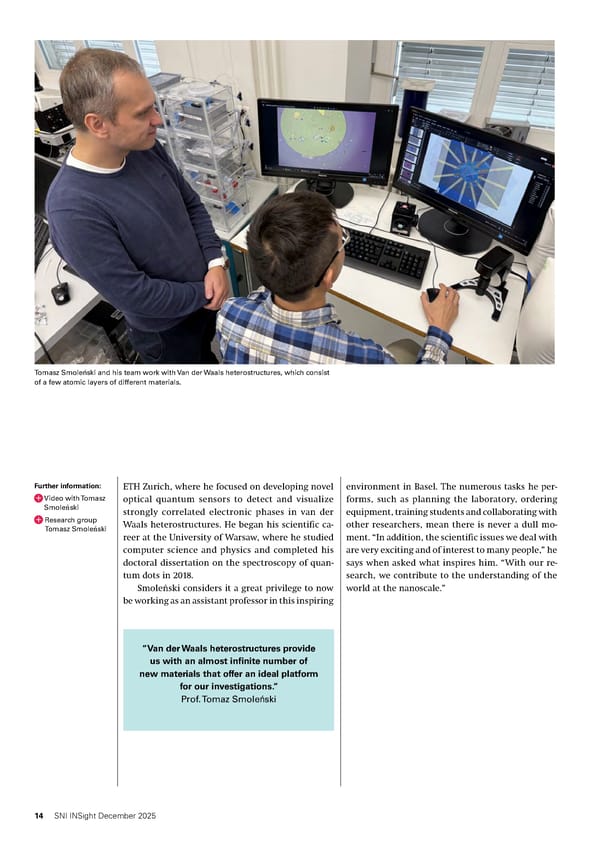
Network Funding of SNI members In the last six months, funding has been awarded to several members of our network. Here is a brief description of some of their projects. Data-based optimization of enzymes Professor Michael Nash (Department of Chemistry, University of Basel and ETH Zurich) has launched a new project in the field of enzyme engineering with a view to the targeted improvement of enzymes — for example, for medical applications. The challenge is to optimize multiple properties — such as activity, stability and specificity — at the same time. Supported for four years by the Swiss National Science Foundation (SNSF), the project combines new experimental and computer-assisted ap- proaches to study enzyme variants more effi- ciently. Using a newly developed method known as en- zyme proximity sequencing, the researchers from Nash’s team will test thousands of enzyme variants in yeast cells simultaneously with a view to identi- fying those that are particularly efficient. Based on the example of the enzyme asparaginase, which plays a key role in cancer therapies, the aim is to demonstrate how enzymes could in the future be improved in more targeted way and based on data rather than trial and error. New approaches to nitrate production and photochemistry In the last round of calls, two ERC Advanced Grants were awarded to two long-term SNI members from the Department of Chemistry of the University of Basel. Professor Thomas Ward’s project will explore completely new approaches to produce nitrogen in a form that is available to plants. Ward wants to de- velop an efficient process for producing this key plant nutrient with lower energy consumption and lower emissions. Nitrogen for agriculture is often produced in the form of ammonia, based on the reduction of N2 to NH3. In his approach, Ward uses an oxidation process instead and plans to produce nitrate — which can Further information: Research group Michael Nash Research group Thomas Ward Michael Nash discusses results with his doctoral student Marco Ernst on the path to improving enzymes. 15 SNI INSight December 2025
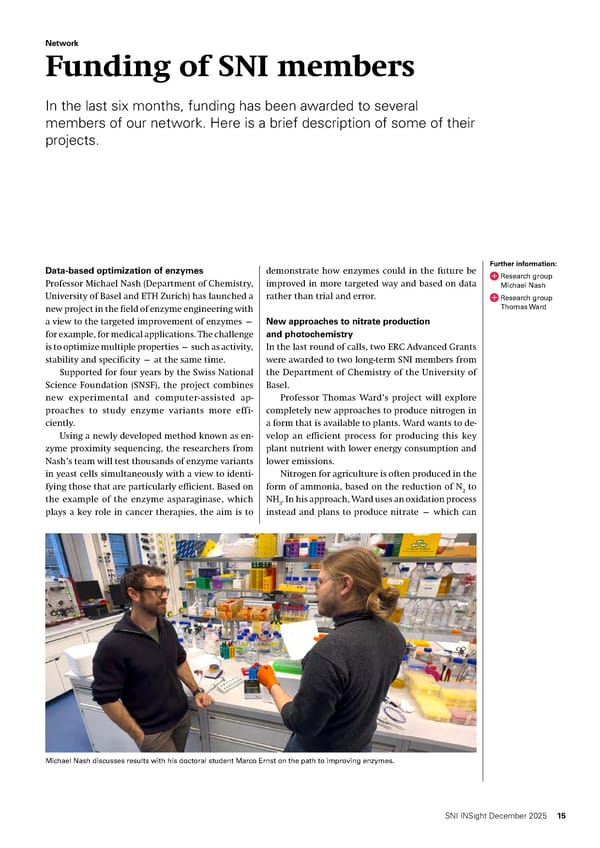
Further information: Research group Oliver Wenger Research group Martino Poggio Research group Tomasz Smoleński Research group Richard Warburton Uni News PHOQUS Research group Dominik Zumbühl Interreg Project UpQuantVal Influencing and controlling quantum states with light Professor Tomasz Smoleński joined the Department of Physics at the University of Basel in early 2025 and has recently been awarded both an ERC Starting Grant and an SNSF Spark project. Within the ERC Starting Grant — funded for five years and set to begin in January 2026 — researchers in the Smoleński Group will investigate how light can selectively modify the properties of novel quan- tum materials. The studied van der Waals hetero- structures consist of only a few atomic layers and host collective electronic states that behave as if ex- posed to an extremely strong artificial magnetic field, even though no real magnetic field is applied. The project aims to understand how light can influ- ence and control these sensitive quantum states. In the long term, these insights are expected to open new pathways for the optical control of quantum phases — a key step toward future quantum and nanotechnologies. In the SNSF Spark project, the Smoleński team will implement a novel quantum-optical interface for sensing the dynamics of electrons forming exotic states in two-dimensional materials. This approach could provide a revolutionary photonic platform en- abling ultrafast access to emergent quantum phases of matter. Entangled photons for quantum technology An international team involving Professor Richard Warburton from the Department of Physics at the University of Basel has recently been awarded a pres- tigious European Research Council (ERC) Synergy Grant. In this project, the researchers aim to create entangled photons for applications in quantum com- puting and quantum communication. The entangled photons will be created using advanced semiconduc- tors. Until now, only single photons could be used in quantum communication to transmit information over long distances or as the smallest unit of a quan- tum computer (qubit). The more photons are used, the more complicated and expensive the hardware becomes. In the PHOQUS project, which has now been ap- proved for 6 years as part of the EU’s Horizon Europe program, the researchers aim to create so-called “photonic resource states” – groups of at least three photons that are entangled with each other. These resource states can be used at the inputs of a pho- tonic chip and are predicted to be much more scal- able than single photons. The research is being conducted jointly by teams in Basel, Bochum, and Copenhagen. In Bochum, new semiconductors, notably quantum dots, will be de- veloped. In Basel, the new semiconductors will be tested and the first device prototypes built, while in Magnetic properties of van der Waals materials In April 2026, Professor Martino Poggio (Department of Physics, University of Basel) will launch a four-year SNSF project. As part of this work, his team will in- vestigate extremely thin magnetic materials known as van der Waals magnets, which are made up of just one or a few atomic layers. The goal is to understand how the magnetic prop- erties change if a material becomes this thin. Al- though magnetism is well understood in macro- scopic systems, so-called “low-dimensional” magne- tism and the mechanisms that stabilize it continue to defy expectation. Perhaps more importantly, the researchers are excited to explore how these mate- rials can be engineered into magnetic devices with new functionality. To investigate these systems, the team will have to develop extremely sensitive mag- netic imaging techniques capable of resolving the tiny magnetic fields produced by single atomic lay- ers. These include scanning probes based on nano- magnetometers or ultrasensitive mechanical oscil- lators that can map magnetic fields on the scale of just a few nanometers. Ultimately, the researchers aim to improve our understanding of magnetism and to assess how van der Waals materials could be used for future applications in ultra-small magnetic com- ponents or memory. also be readily absorbed by plants. To this end, the researchers will reprogram me- talloenzymes from bacteria and archaea to catalyze the oxidation of N2 to nitrate. As a fertilizer, nitrate has several advantages over ammonia — and the ox- idation of N2 also requires less energy than reduction. The new technique could therefore reduce energy consumption in agriculture in the long term. The other ERC Advanced Grant went to Professor Oliver Wenger for his research in the field of photo- chemistry — the study of chemical reactions trig- gered by light. Wenger and his team want to expand the poten- tial of photochemistry by overcoming a fundamental limitation: According to “Kasha’s rule,” only the low- est excited energy state of a molecule can be used for chemical reactions. As higher excited states lose their energy too quickly, there has so far been no way to use them effectively. The project now being funded aims to overcome these boundaries and specifically initiate chemical reactions from higher excited states. To this end, the researchers are pursuing two approaches: They want to slow down energy loss from these states while also increasing the reaction speed so that reactions take place faster than energy is lost. If they succeed in carrying out these reactions reliably, their work could drive significant advances in both synthetic chemis- try and the efficient conversion of solar energy. 16 SNI INSight December 2025
Copenhagen, the theoretical foundations will be developed along with more advanced devices. Promotion of quantum research on the Upper Rhine Since early 2025, Professor Dominik Zumbühl has been involved in the Interreg project “UpQuantVal – Quantum Valley Upper Rhine”, which runs until the end of 2027. This project is intended to bolster the Upper Rhine region as a leading location for quantum technologies. To this end, research insti- tutions, businesses and public stakeholders from Germany, France and Switzerland are working hand in hand in order to network existing skills and push ahead with innovative technologies. The University of Basel is responsible for the project on the Swiss side, with Professor Zumbühl and his team playing an active role and contributing their expertise in quantum physics and spin sys- tems. Together with some 19 partners, UpQuantVal is committed to the establishment of shared infra- structure, the promotion of education and training, and technology transfer with a view to accelerating the market maturity of quantum technologies and positioning the Upper Rhine region as a hub for innovation. Two quantum dots, creating a grid of entangled photons. (Image: University of Basel, Department of Physics ) 17 SNI INSight December 2025
SNI PhD School Successful defenses of doctoral dissertations In recent months, several doctoral students from the SNI PhD School have given successful defenses of their dissertations. These young researchers carried out their underlying practical work at various departments of the University of Basel or at the Paul Scherrer Institute. As well as sound theoretical and practical knowledge, the multifaceted program of the SNI PhD School also provided them with valuable knowledge when it comes to founding a start-up and in the areas of communica- tion and rhetoric. While working on their doctorates, the researchers also had numerous opportunities to present their findings to members of the SNI network and discuss their results. Here we provide a brief overview of the topics that have been addressed by graduates in recent months. We congratulate all the new doctors on their successful defenses and wish them all the best for the future! Assembly of nanoharpoon in response to attack In his doctoral dissertation, Dr. Mitchell Brüderlin studied the type VI secretion system of the bacte- rium Pseudomonas aeruginosa. This system acts like a nanoharpoon, which the bacterium uses to inject toxins into neighboring cells — albeit only in re- sponse to attack. Brüderlin simulated attacks of this kind using the tip of an atomic force microscope (AFM). He was able to show that an injury to the outer membrane is sufficient for the bacteria to assemble the secre- tion system within seconds and fire back — in ex- actly the direction from which the attack came. Video 18 SNI INSight December 2025
Machine learning for protein optimization In his doctoral dissertation, Dr. Vanni Doffini studied how ma- chine learning (ML) can be used to specifically modify and im- prove proteins. Small changes of this kind in the amino acid sequence can significantly impact stability, binding or activity — and reliable predictions of the effect of a modification are therefore vital. In his work, Doffini combined theoretical principles with practical experiments. Using the applied method, he was able to optimize a therapeutic peptide against antibiotic-resistant bacteria. As well as developing a platform for screening pro- tein-protein interactions, he introduced a new ML toolkit for rapid analysis of large biophysical datasets. His work shows how machine learning could accelerate protein engineering and pave the way for new applications. Surface properties of spintronic materials In his doctoral dissertation, Dr. Martin Heinrich investigated materials that are relevant to novel storage and switching tech- nologies. These materials have both semiconducting and special magnetic properties and are known as multiferroic or alterma- gnetic systems. They may have applications in spintronics, a field of research that uses the spin of electrons — instead of their charge — to store information. Floating thanks to acoustics In his doctoral dissertation, Dr. Shichao Jia investigated how ultrasonic waves can be used to move and manipulate samples without touching them. He focused on both acoustic levitation and acoustic tweezers, scaling the technologies down to ever smaller dimensions. In the case of acoustic levitation, Jia showed how ultrasound can be used not only to lift millimeter-sized disks but also to make them rotate — depending on their shape and size. Disks of this kind have already been used as sample holders for X-ray diffraction. In water, Jia used significantly higher frequencies to drive the miniature rotors. Using acoustic tweezers, he also investigated how micro- scopic samples can be moved precisely and even compressed — for use in microfluidic systems with biological samples, for example. 19 SNI INSight December 2025
New metal-organic materials In his doctoral dissertation, Ajmal Roshan Unniram Parambil investigated “metal oxo clusters” consisting of zirconium and hafnium. These are tiny molecules that can serve as links be- tween metal-organic frameworks (MOFs) and metal oxide nano- crystals. The aim of this work was to gain a better understanding of the structure of metal oxo clusters, the stabilizing ligands, and the formation of larger structures. Using experiments and sim- ulations, Unniram Parambil identified general structural trends and showed that phosphorus-based ligands are particularly ef- fective at stabilizing the clusters. He also succeeded in using amphiphilic ligands to form thin, two-dimensional layers of these clusters. These could potentially serve as building blocks for new, tailor-made materials. Temperature sensors for fuel cells In her doctoral dissertation, Dr. Antonia Ruffo researched fer- romagnetic materials as temperature sensors for polymer elec- trolyte membrane fuel cells (PEMFCs). These cells convert hy- drogen into electricity efficiently and could see greater use in vehicles. As their membrane only conducts protons at optimum humidity, a stable temperature is vital. Specifically, heat dries out the membrane, and cold causes an excess of water, imped- ing the exchange of gases. To this end, Ruffo investigated various ferromagnetic ma- terials in the micro- and nanometer range and optimized a neodymium-iron-boron alloy (NdFeB) for use in operational cells. With this noninvasive temperature measurement, her work contributes to a better understanding of the temperature distribution and shows how new sensor materials can improve the stability and efficiency of PEMFCs — a step toward their wider use as an environmentally friendly source of energy. Nanowires as highly sensitive sensors Dr. Lukas Schneider investigated magnetism on the nanoscale using nanowire magnetic force microscopy. These highly sen- sitive sensors measure even weak magnetic fields at a resolution of less than 100 nm — at everything from extremely low tem- peratures to room temperature and in strong magnetic fields. Lukas’ studies of the helimagnetic material copper oxide sele- nite (Cu₂OSeO₃) as well as the van der Waals magnets chro- mium germanium telluride (Cr₂Ge₂Te₆) and europium germa- nide (EuGe₂) have shown that magnetic force microscopy with nanowires as cantilevers is particularly well suited to weakly magnetic samples and nanoscale magnetic dynamics. 20 SNI INSight December 2025
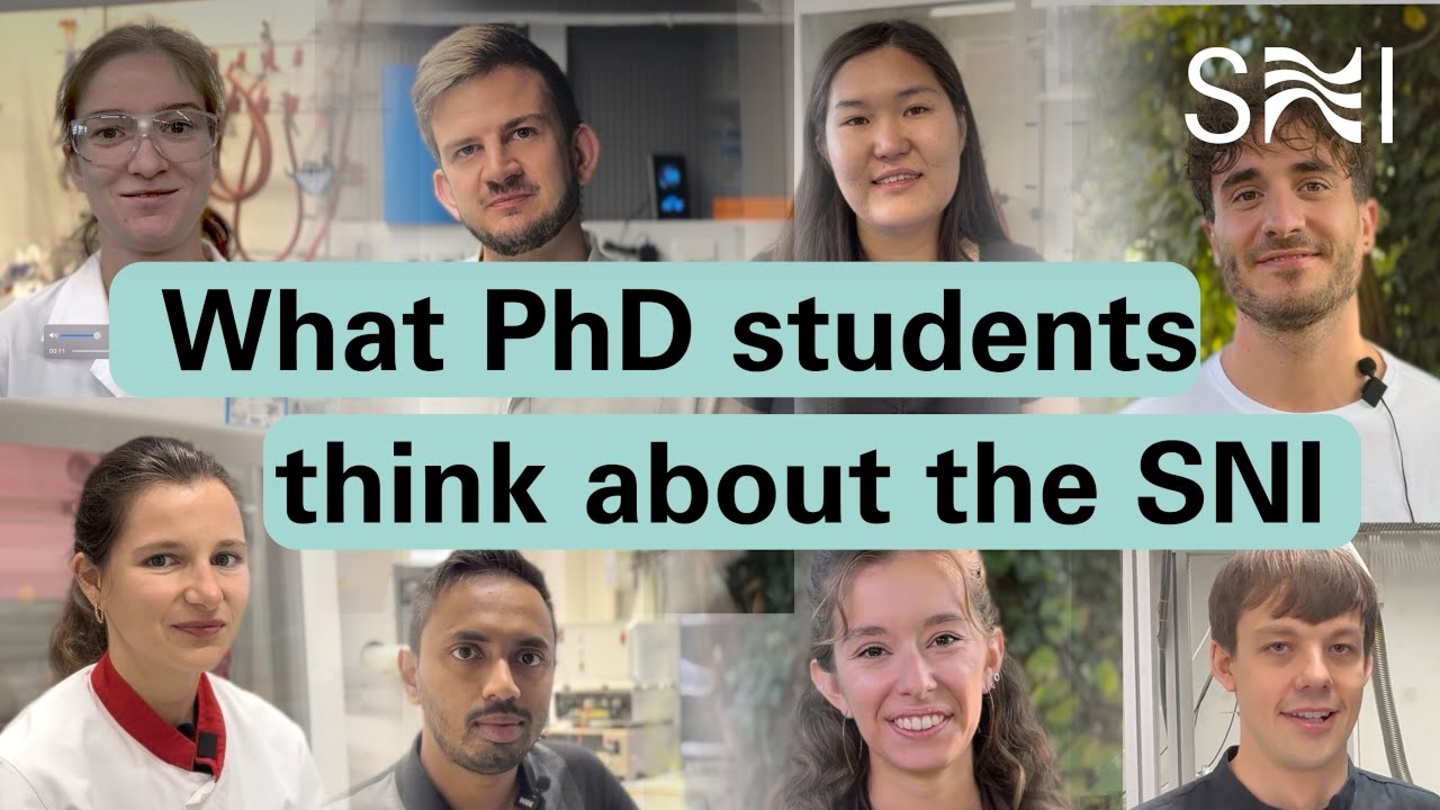
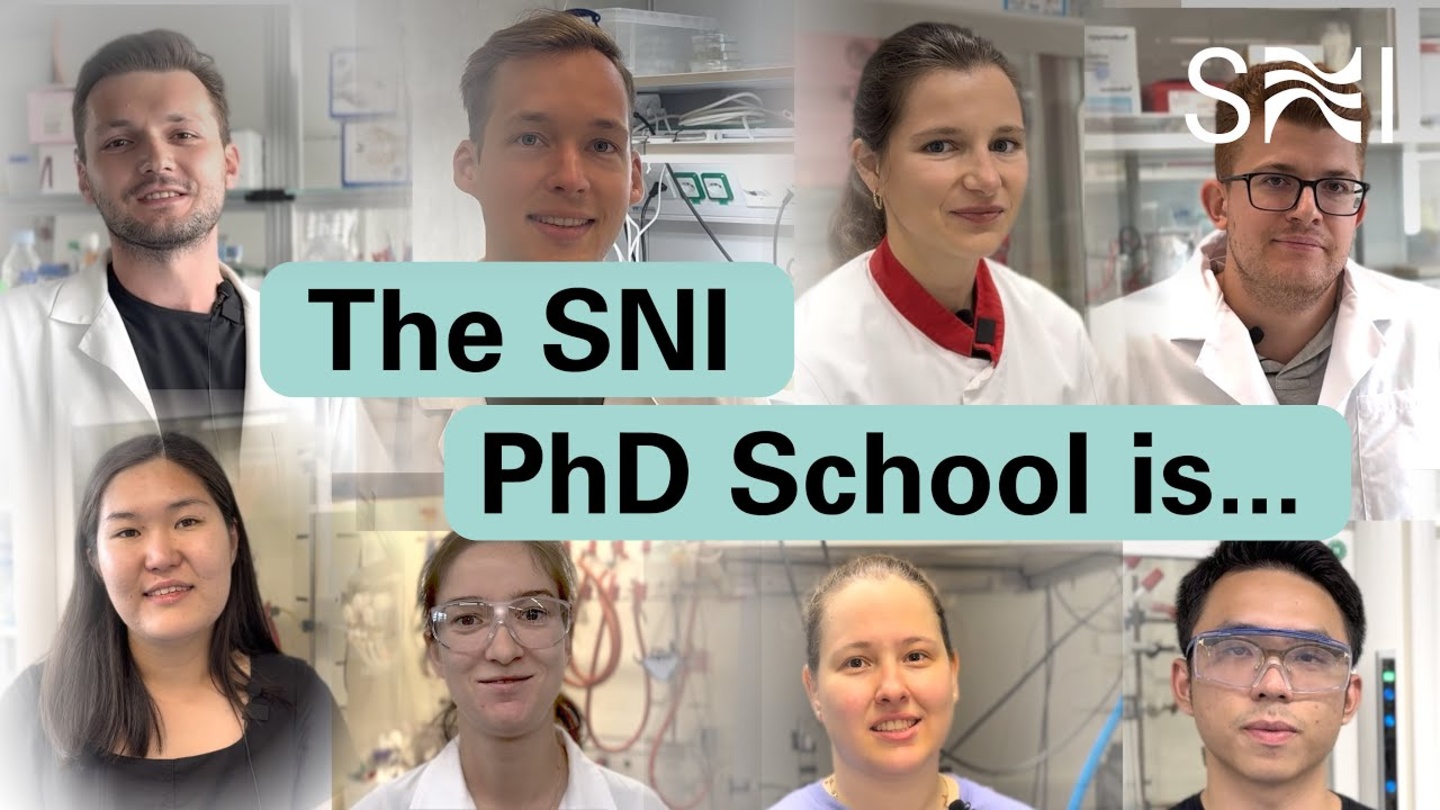
Magnetic vortices for data storage In his doctoral dissertation, Dr. Sam Treves investigated sky- rmions in the material neodymium manganese germanide (NdMn₂Ge₂). Skyrmions are tiny, stable magnetic vortices with huge potential for data storage and novel computing methods. It is particularly interesting that they remain stable in NdMn₂Ge₂ at room temperature even without the appli- cation of an external magnetic field. Treves was initially able to demonstrate the presence of skyrmions in thin lamellae of single crystals — even in the case of temperature changes and magnetic fields. As crystals grow slowly and are expensive and difficult to scale up, how- ever, he grew additional thin films of the material. There, he also observed skyrmion-like structures, whose magnetization could even be reversed — presumably due to grains and de- fects within the material. This work shows how strongly the material structure af- fects magnetic properties, demonstrating the potential of thin NdMn₂Ge₂ layers for future storage technologies. What do our doctoral students think about the SNI and the SNI PhD School? In two short videos, doctoral students talk about what the SNI means to them and what makes the SNI Doctoral School so special. Video “What PhD students think about the SNI“ Video “The SNI PhD School is...“ Further information: SNI PhD School 21 SNI INSight December 2025
100µm 22 SNI INSight December 2025
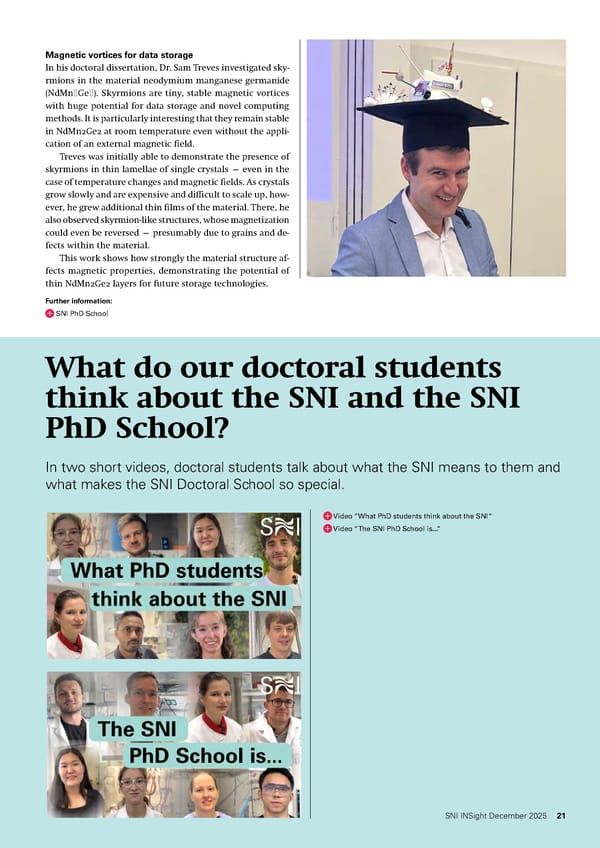
Science meets aesthetics This winning image from the Nano Image Awards 2025, entitled “The Beauty of Protein Foam,” shows a stable, biocompatible protein network made up of natural albumin. The networked pore structure offers an ideal microenvironment for cell adhesion and tissue integration, providing a promising framework for the regeneration of bone and cartilage. (Image: Sven Zaugg, FHNW) 23 SNI INSight December 2025
Study program 20 years since the first bachelor’s degree A good reason to look back and celebrate Over the course of 2005, the first stu- dents completed their bachelor’s de- grees in nanosciences at the Basel University. Back then, setting up this interdisciplinary degree program was a visionary move. Today, the program is well established and has been run- ning successfully for many years. To celebrate the 20th anniversary of the first bachelor’s degree, around 160 “nanos” gathered at Volkshaus Basel in summer 2025 to look back on the many shared experiences, reconnect with existing contacts, and make new ones. Die Jubiläumsfeier des Studiengangs bot eine exzellente Gelegenheit das Nano-Netzwerk zusammen zu bringen. As one of Switzerland’s first National Centers of Competence in Research (NCCRs), the NCCR Nanoscale Science was launched in 2001 with the University of Basel as the leading house. One objec- tive of this initiative, which was funded by the Swiss National Science Founda- tion (SNSF), was to set up and push ahead with training in the interdisciplinary field of the nanosciences in Switzerland. Professor Andreas Engel was a driving force when it came to developing the in- terdisciplinary degree program in nano- sciences on a professional basis. With support from colleagues from the Biozentrum and the Departments of Physics, Chemistry and Mathematics, a combined bachelor’s and master’s pro- gram in nanosciences was then founded at the University of Basel in 2002 –– one of the first such programs in the world. Whilst other universities didn’t offer nanosciences until the master’s level, the University of Basel sought to provide young nanoscientists with a solid ground- ing in all natural sciences from the out- set — and that remains the case today. Only with this broad knowledge base and interdisciplinary understanding can 24 SNI INSight December 2025
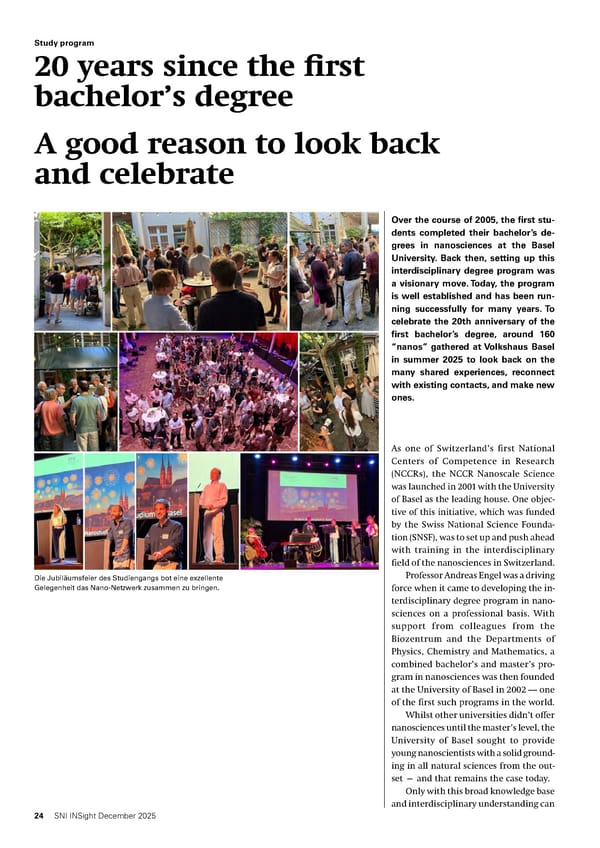
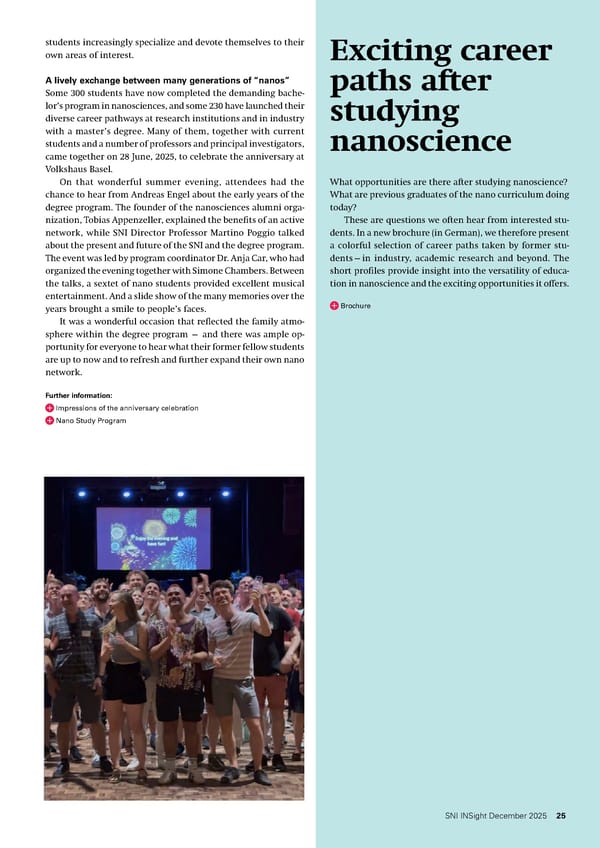
students increasingly specialize and devote themselves to their own areas of interest. A lively exchange between many generations of “nanos” Some 300 students have now completed the demanding bache- lor’s program in nanosciences, and some 230 have launched their diverse career pathways at research institutions and in industry with a master’s degree. Many of them, together with current students and a number of professors and principal investigators, came together on 28 June, 2025, to celebrate the anniversary at Volkshaus Basel. On that wonderful summer evening, attendees had the chance to hear from Andreas Engel about the early years of the degree program. The founder of the nanosciences alumni orga- nization, Tobias Appenzeller, explained the benefits of an active network, while SNI Director Professor Martino Poggio talked about the present and future of the SNI and the degree program. The event was led by program coordinator Dr. Anja Car, who had organized the evening together with Simone Chambers. Between the talks, a sextet of nano students provided excellent musical entertainment. And a slide show of the many memories over the years brought a smile to people’s faces. It was a wonderful occasion that reflected the family atmo- sphere within the degree program — and there was ample op- portunity for everyone to hear what their former fellow students are up to now and to refresh and further expand their own nano network. Further information: Impressions of the anniversary celebration Nano Study Program Exciting career paths after studying nanoscience What opportunities are there after studying nanoscience? What are previous graduates of the nano curriculum doing today? These are questions we often hear from interested stu- dents. In a new brochure (in German), we therefore present a colorful selection of career paths taken by former stu- dents—in industry, academic research and beyond. The short profiles provide insight into the versatility of educa- tion in nanoscience and the exciting opportunities it offers. Brochure 25 SNI INSight December 2025
Nano student association builds team spirit Nanoscience students repeatedly emphasize the out- standing team spirit that exists between them. The nano student association of the University of Basel plays a key role in this, organizing numerous events. Indeed, a varied program is on offer for nanoscience students every semester, from hikes with future stu- dents before they begin their studies to raclette and bowling nights, book presentations and lunchtime lectures. The “nanos” therefore also get to know each other well — even across different semester groups — and engage in a regular exchange of ideas. All of these activities are the responsibility of the board of the nano student association. In November, some changes were made to the board in terms of responsibilities. President Laurine Haller Vice president Niklas Bielefeld Treasurer Lea Schärrer Secretary Elea Humbel PhD representatives Elaine Schneider Rahel Kaiser Master’s representatives Meret Benninger Sarah Stalder Year-group representatives 24 and PR Aimee Gottee Year-group representatives 25 Sashank Gade Beyza Nur Cölkusu Jimena Lopez Castro AlumniNano maintains contacts For many years, the AlumniNano organization has continued what the nano student association builds up over the course of a person’s studies: dialog, team spirit and networking. Tobias Appenzeller founded the AlumniNano organization, which is part of AlumniBasel, 11 years ago and served as its president until mid-October 2025. In collaboration with an active board, he de- veloped AlumniNano into a living, breathing net- work that meets on a regular basis in Basel and Zurich, maintains existing contacts, and provides advice and assistance to younger nanoscience grad- uates and current students alike. As part of the 2025 reunion, the organization bid farewell to the outgoing board — consisting of Appenzeller together with Etienne Berner, David Bracher, Benjamin Banusch, Michael Gerspach, Natascha Kappeler and Peter Noy — and the new board was presented. Milan Liepelt is the new president, Alexa Dani and Timon Flathmann will support him in commu- nication, Gregory Zaugg will now be responsible for organizing events, and Niels Burzan will be respon- sible for finances. The new president of the nano student association, Laurine Haller, is also a member of the extended board along with numerous year- group representatives. The SNI would like to thank all those involved in the nano student association or AlumniNano and who make the nano community so unique. We look forward to the new ideas and initiatives, and to working with the new teams. New boards in the nano student association and AlumniNano The last few months have been a busy time in the AlumniNano orga- nization, as well as in the faculty group nanosciences and the nano student association. Over the coming months, new boards in the various organizations will put their ideas into practice with a view to strengthening the nano network among students, alumni and SNI members. Further informationen: AlumniNano Registration AlumniNano Nano student association 26 SNI INSight December 2025 Study Program
Guest article by the board of the AlumniNano organization How does it continue? The new AlumniNano board will embrace the com- ing years with fresh energy and impetus. Four of the five board members began their bach- elor’s studies in the nanosciences in 2018 and are now embarking on their careers: Milan is doing a doctorate in quantum computing in industry, Gregory is working in medtech development, Timon is doing a doctorate on nano-drug delivery, and Alexa is working in pharmaceutical nanoana- lytics. The team is complemented by Niels Burzan (of the 2010 intake), who draws on his expertise in financial risk management and venture capital. Together, we want to further strengthen the net- work between students, alumni and the SNI and cre- ate new opportunities for personal and professional dialog in both the short and long term. For current students, we want to strengthen our visibility again — for example, at the general assem- bly, the master’s degree ceremony or informal for- mats for dialog. We also want to provide greater support for lunchtime lectures delivered by alumni in order to provide insights into different career pathways. We believe it’s important to actively ac- company the transition from studying to the next stage in life, whether it be starting a career or a doctorate. In the long term, we’d therefore like to establish a mentoring program, bringing together students and enthusiastic alumni. We’re also planning new opportunities for our alumni: additional events, a more active LinkedIn group and targeted initiatives with a view to bring lost members back into the network — because ev- ery nano counts! Another objective is to expand contacts within and outside the nano network. We want to engage in collaborations with other alumni groups in order to expand the range of initiatives as well as devel- oping connections with local companies. This will allow us to relay job vacancies and career opportu- nities to our members in a more targeted manner — and, in the long term, perhaps also to set up joint job fairs or networking events. We look forward to putting these ideas into prac- tice in collaboration with the community — and to many inspiring encounters over the coming year! The board of AlumniNano Gregory Zaugg, Timon Flathmann, Alexa Dani and Milan Liepelt (from left to right) intro- duced themselves as the new board of the AlumniNano Organization at the last reunion. Niels Burzan, who is also on the board, is not in the photo. (Image: S. Stalder) Members of AlumniNano and current students meet several times a year to network and exchange ideas. (Image: S. Stalder) 27 SNI INSight December 2025
28 SNI INSight December 2025
Science meets aesthetics The third winning image from the Nano Image Awards 2025, entitled “Triangles in a Triangle,” shows a single triangle of tungsten diselenide on a graphene/silicon carbide (SiC) substrate. The triangle breaks down into triangles within triangles, forming a series of nested facets. The AFM height image (produced in tapping mode) shows the pattern, and the diagonal bands trace the stepped terraces of SiC that guide the triangle’s growth. (Image: Ángel Labordet EMPA and SNI) 29 SNI INSight December 2025
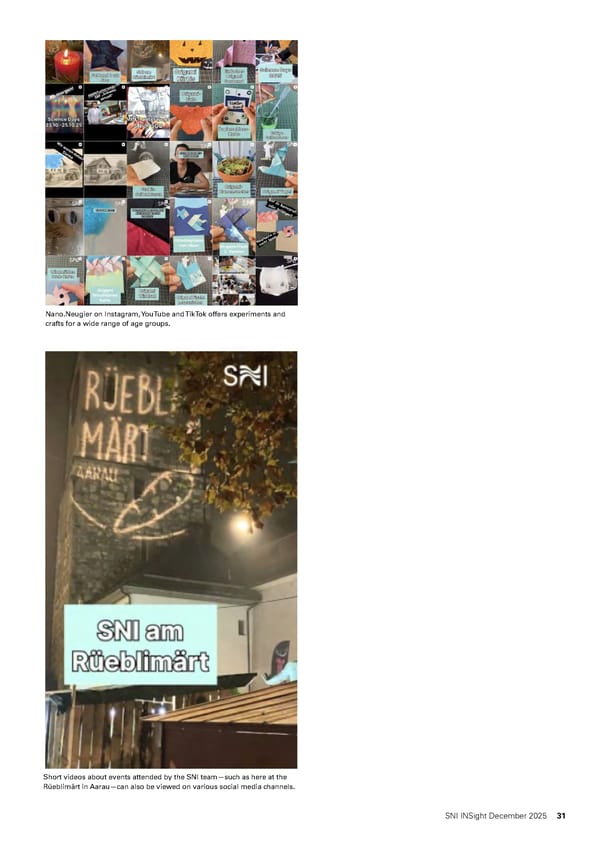
During the coronavirus pandemic, the SNI outreach team — which at that time consisted of Dr. Kerstin Beyer-Hans, Dr. Michèle Wegmann and Dr. Christel Möller — began to produce short videos on experi- ments to carry out at home. The aim here was to present and explain various scientific phenomena in an accessible and entertaining way. With Nano.Neugier, these activities now have their own channels on Instagram, TikTok and YouTube. As well as the experiments, there are also numerous step-by-step guides for fun craft projects that can brighten a day or even make an ideal gift. For exam- ple, new content in recent weeks included numerous seasonal origami projects. On a regular basis, out- reach manager Beyer-Hans also posts various small experiments that can be carried out at home using ordinary household materials as an easy and exciting way of demonstrating the fundamental laws of the natural sciences. “With the Nano.Neugier channels, we want to provide entertaining activities for families,” she ex- plains. From her own experience, Beyer-Hans knows Further informationen: Nano.Neugier Instagram Nano.Neugier YouTube Nano.Neugier TikTok Further SNI social media channels: LinkedIn YouTube Bluesky Instagram Outreach Nano.Neugier: Ideas for experiments and craft projects Around half a year ago, the SNI launched three new social media channels under the name Nano.Neugier (German for “Nano. Curiosity”). On Instagram, YouTube and TikTok, the institute now regularly presents tips and ideas for experiments and craft projects — which are generally seasonal or intended to mark specific holidays. that fun projects can really brighten up a rainy week- end at home, for example. A complement to existing channels With families as its target audience, Nano.Neugier has a different offer from the existing SNI channels. Current and future students are addressed via the Instagram channel “nano_study_sni,” while the YouTube channel “Swiss Nanoscience Institute” pro- vides videos on nanoresearch at the SNI as well as the nanoscience program, events and the PhD School. Lastly, we use LinkedIn and the relatively new Bluesky channel of the SNI to provide regular information on the latest developments from our network. Across all our channels, we’re always delighted to welcome new followers and hear their many com- ments and suggestions. 30 SNI INSight December 2025
Nano.Neugier on Instagram, YouTube and TikTok offers experiments and crafts for a wide range of age groups. Short videos about events attended by the SNI team—such as here at the Rüeblimärt in Aarau—can also be viewed on various social media channels. 31 SNI INSight December 2025
News from the SNI network Kagome network from a single molecular building block: Complex structure produced by self-assembly of porphyrin derivate Researchers from the SNI network have shown that copies of a single molecular building block can spon- taneously form a complex supramolecular structure on surfaces. Writing in the journal Communications Chemistry, the researchers describe how the studied porphyrin derivate arranges itself as individual mol- ecules, in short chains or as a complex Kagome net- work on a silver surface. In each of these three roles, the molecule adopts a different conformation. The results are an example of how — and in what con- ditions —self-assembled molecular structures can use a small number of components to form complex structures at interfaces. Even in the primordial at- mosphere, adaptable structures of this kind may have contributed to the origin and development of biochemical processes. SNI post Original publication Rotated magnetic field for more stable qubits Researchers from the SNI network have presented a method that allows them not only to control quantum states more easily but also to keep them stable for lon- ger. To this end, they rotate the magnetic field in a semi- conducting nanowire that contains individual electrons acting as quantum bits. Led by Professor Christian Schönenberger (Department of Physics, University of Basel), the team published their results in Communica- tions Physics. The findings could help to drive forward the development of a reliable and scalable quantum computer. SNI post Original publication In the case of self-assembly on a silver surface, the analyzed porphyrin deri- vate is present in three different forms (represented by the three molecules at the bottom left). The formation of the complex Kagome network involves the orange and yellow conformations shown in the image. The hydrogen bonds vary depending on how the conformations bond to one another (as seen between two silver-colored hydrogen atoms in the magnified section). In the isolated molecules (pink), the side groups have a different configuration. (Image: Scixel und Department of Physics, University of Basel) The researchers from the Department of Physics and the Swiss Nanoscience Institute (SNI) of the University of Basel used these chips to conduct research into more stable and controllable qubits. (Image: A. Kononov, Department of Physics, University of Basel) 32 SNI INSight December 2025
Manipulating tiny things with sound Researchers from the SNI network recently published their findings on using acoustic tweezers — devices that manipulate tiny objects using sound waves without solid contact— in a more efficient and sustainable man- ner. Rather than using a single chip, the researchers used a combination of a reusable sonic chip and a dis- posable microfluidic chip. This allowed them to conduct the experiments more cost-effectively and with mini- mized cross-contamination between experiments. SNI post Original publication Biological cells can be captured and examined with the help of sound. They deform temporarily under the pressure of the waves. (Image: Scale bars 10 μm, S. Jia, SNI and Paul Scherrer Institute) A smart accelerator for qubits Researchers at the University of Basel have made a quantum bit faster and more robust at the same time. In the future, this could help in the develop- ment of quantum computers. University of Basel post Original publication Using electric fields, the Basel researchers drive qubits made of holes in a nanowire. In doing so, they can adjust the accelerator in such a way that the qubits are simultaneously fast and robust against outside influences (yellow) and are not disturbed by the stronger drive (orange). (Illustration: Miguel J. Carballido | CC BY-NC-ND 4.0) Controlled phase separation in membranes A team of researchers from the SNI network has demonstrated for the first time that lateral phase sep- aration in membranes can be specifically controlled by a chemical reaction. The article, published in the Jour- nal of the American Chemical Society, highlights how chemical catalysis can be used to dynamically control membranes – an important step toward the develop- ment of “smart” artificial vesicles. SNI post Original publication An artificial metalloenzyme (orange-brown structure) anchored to the sur- face of lipid membranes allows lateral phase separation in membranes to be specifically controlled (represented by light blue and pink areas). Tar- geted genetic optimization of the enzyme can lead to the formation of larger membrane domains, which can result in cell budding due to the dif- ferent curvatures of the membranes. (Image: R. Hamaguchi, Institute of Science, Tokyo) 33 SNI INSight December 2025
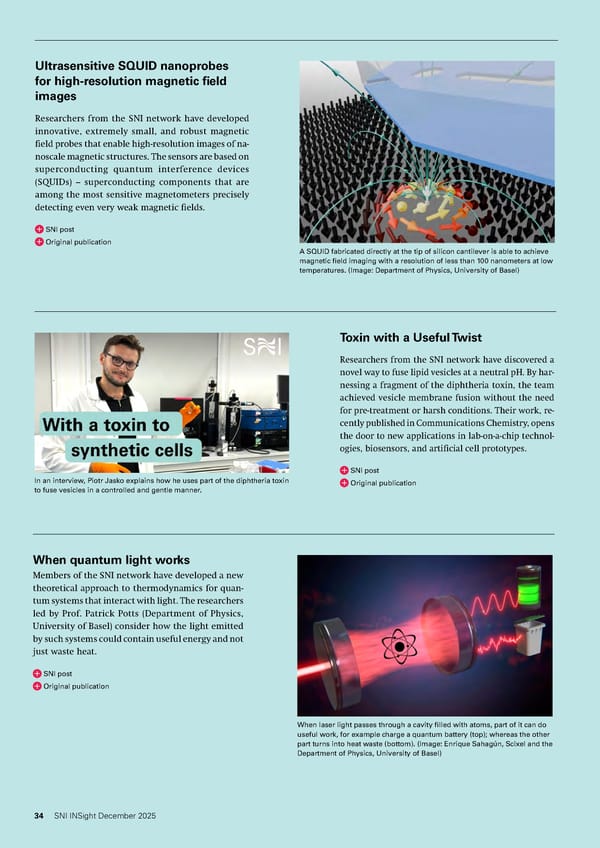
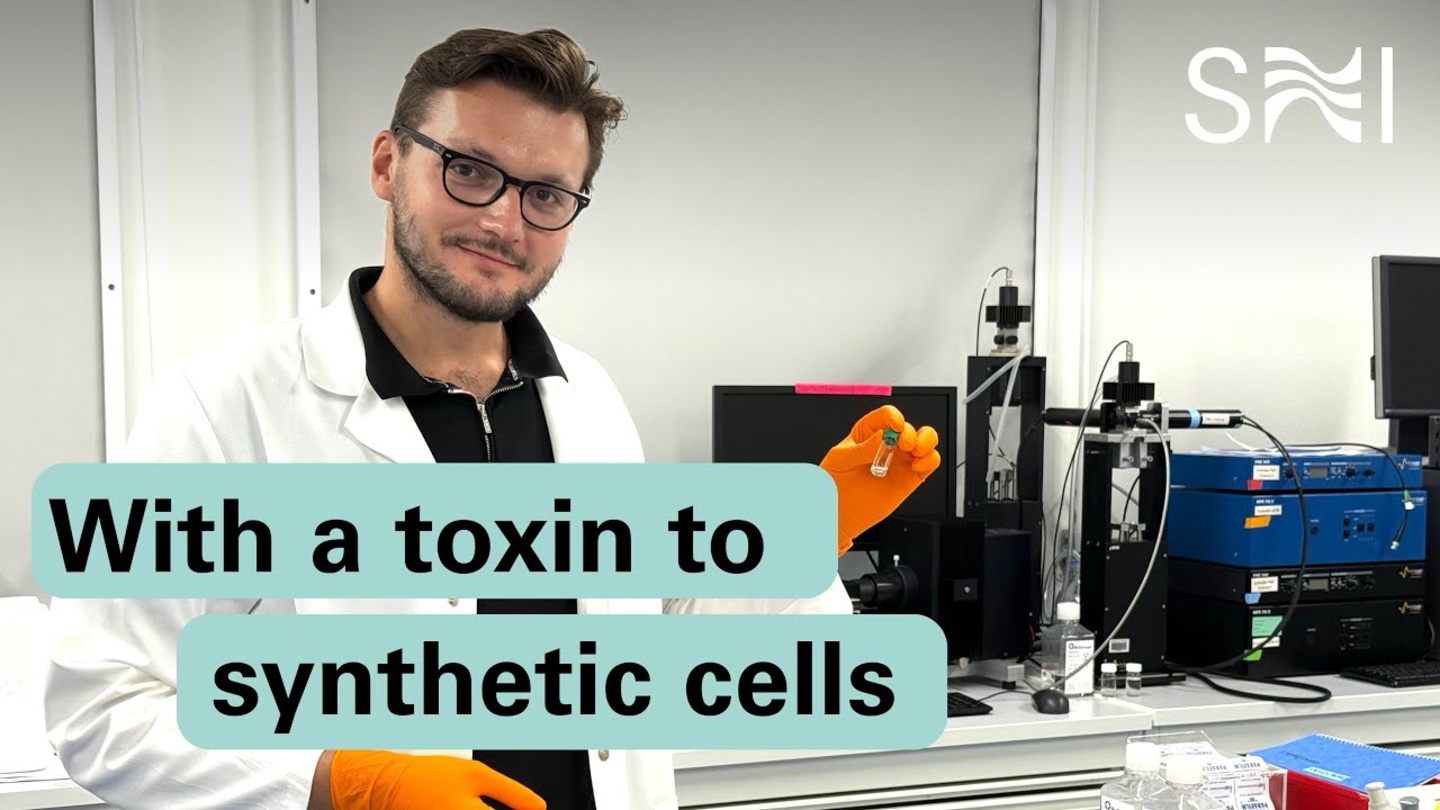
A SQUID fabricated directly at the tip of silicon cantilever is able to achieve magnetic field imaging with a resolution of less than 100 nanometers at low temperatures. (Image: Department of Physics, University of Basel) Ultrasensitive SQUID nanoprobes for high-resolution magnetic field images Researchers from the SNI network have developed innovative, extremely small, and robust magnetic field probes that enable high-resolution images of na- noscale magnetic structures. The sensors are based on superconducting quantum interference devices (SQUIDs) – superconducting components that are among the most sensitive magnetometers precisely detecting even very weak magnetic fields. SNI post Original publication Toxin with a Useful Twist Researchers from the SNI network have discovered a novel way to fuse lipid vesicles at a neutral pH. By har- nessing a fragment of the diphtheria toxin, the team achieved vesicle membrane fusion without the need for pre-treatment or harsh conditions. Their work, re- cently published in Communications Chemistry, opens the door to new applications in lab-on-a-chip technol- ogies, biosensors, and artificial cell prototypes. SNI post Original publication In an interview, Piotr Jasko explains how he uses part of the diphtheria toxin to fuse vesicles in a controlled and gentle manner. When quantum light works Members of the SNI network have developed a new theoretical approach to thermodynamics for quan- tum systems that interact with light. The researchers led by Prof. Patrick Potts (Department of Physics, University of Basel) consider how the light emitted by such systems could contain useful energy and not just waste heat. SNI post Original publication When laser light passes through a cavity filled with atoms, part of it can do useful work, for example charge a quantum battery (top); whereas the other part turns into heat waste (bottom). (Image: Enrique Sahagún, Scixel and the Department of Physics, University of Basel) 34 SNI INSight December 2025
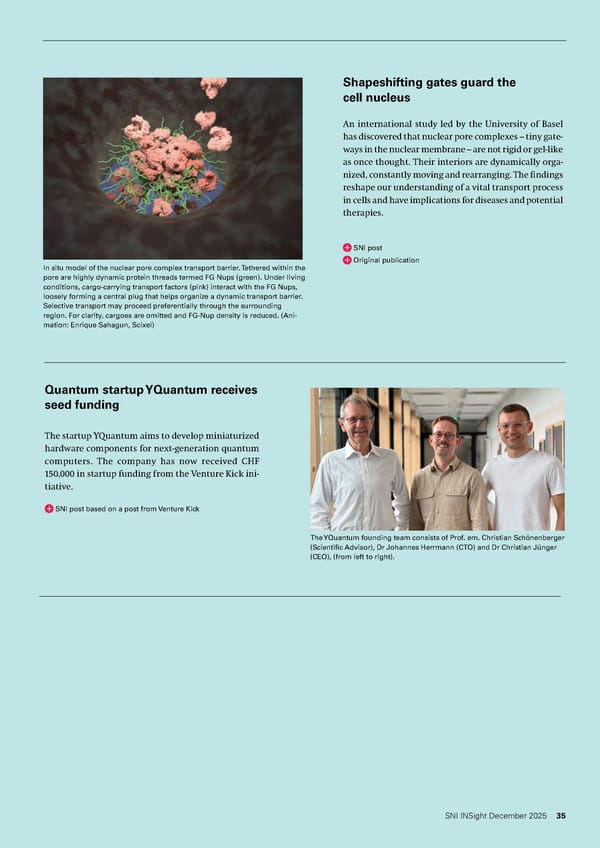
Shapeshifting gates guard the cell nucleus An international study led by the University of Basel has discovered that nuclear pore complexes – tiny gate- ways in the nuclear membrane – are not rigid or gel-like as once thought. Their interiors are dynamically orga- nized, constantly moving and rearranging. The findings reshape our understanding of a vital transport process in cells and have implications for diseases and potential therapies. SNI post Original publication In situ model of the nuclear pore complex transport barrier. Tethered within the pore are highly dynamic protein threads termed FG Nups (green). Under living conditions, cargo-carrying transport factors (pink) interact with the FG Nups, loosely forming a central plug that helps organize a dynamic transport barrier. Selective transport may proceed preferentially through the surrounding region. For clarity, cargoes are omitted and FG-Nup density is reduced. (Ani- mation: Enrique Sahagun, Scixel) The YQuantum founding team consists of Prof. em. Christian Schönenberger (Scientific Advisor), Dr Johannes Herrmann (CTO) and Dr Christian Jünger (CEO), (from left to right). Quantum startup YQuantum receives seed funding The startup YQuantum aims to develop miniaturized hardware components for next-generation quantum computers. The company has now received CHF 150,000 in startup funding from the Venture Kick ini- tiative. SNI post based on a post from Venture Kick 35 SNI INSight December 2025
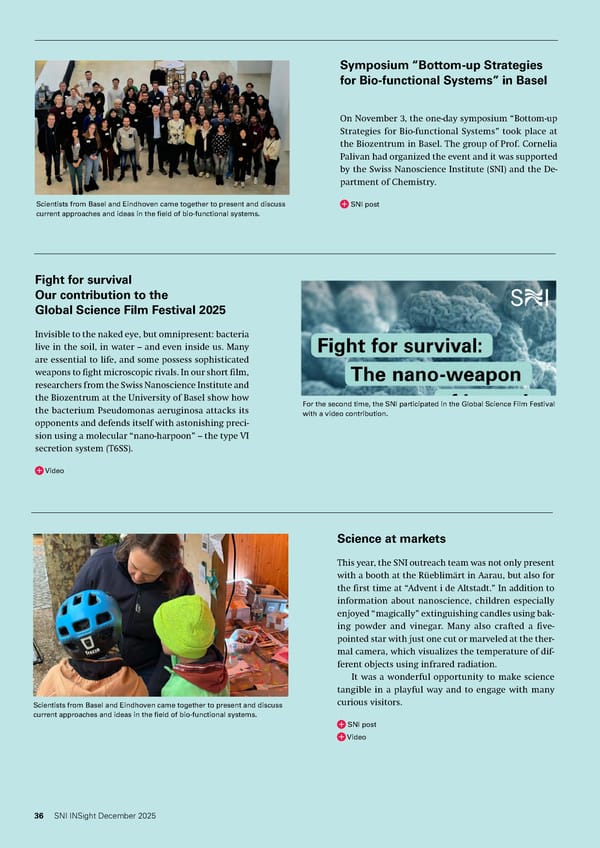
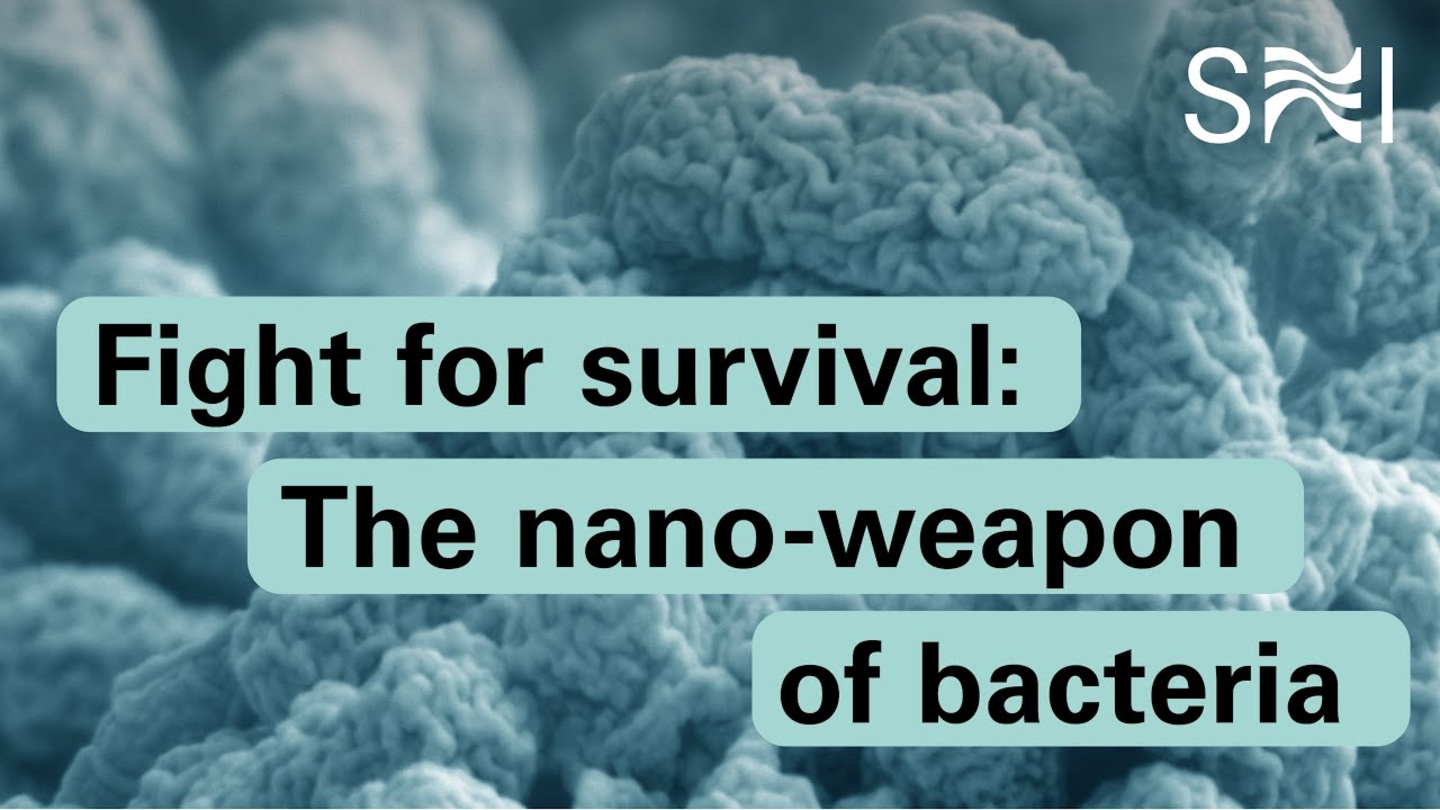
Fight for survival Our contribution to the Global Science Film Festival 2025 Invisible to the naked eye, but omnipresent: bacteria live in the soil, in water – and even inside us. Many are essential to life, and some possess sophisticated weapons to fight microscopic rivals. In our short film, researchers from the Swiss Nanoscience Institute and the Biozentrum at the University of Basel show how the bacterium Pseudomonas aeruginosa attacks its opponents and defends itself with astonishing preci- sion using a molecular “nano-harpoon” – the type VI secretion system (T6SS). Video For the second time, the SNI participated in the Global Science Film Festival with a video contribution. Science at markets This year, the SNI outreach team was not only present with a booth at the Rüeblimärt in Aarau, but also for the first time at “Advent i de Altstadt.” In addition to information about nanoscience, children especially enjoyed “magically” extinguishing candles using bak- ing powder and vinegar. Many also crafted a five- pointed star with just one cut or marveled at the ther- mal camera, which visualizes the temperature of dif- ferent objects using infrared radiation. It was a wonderful opportunity to make science tangible in a playful way and to engage with many curious visitors. SNI post Video Scientists from Basel and Eindhoven came together to present and discuss current approaches and ideas in the field of bio-functional systems. Symposium “Bottom-up Strategies for Bio-functional Systems” in Basel On November 3, the one-day symposium “Bottom-up Strategies for Bio-functional Systems” took place at the Biozentrum in Basel. The group of Prof. Cornelia Palivan had organized the event and it was supported by the Swiss Nanoscience Institute (SNI) and the De- partment of Chemistry. SNI post Scientists from Basel and Eindhoven came together to present and discuss current approaches and ideas in the field of bio-functional systems. 36 SNI INSight December 2025
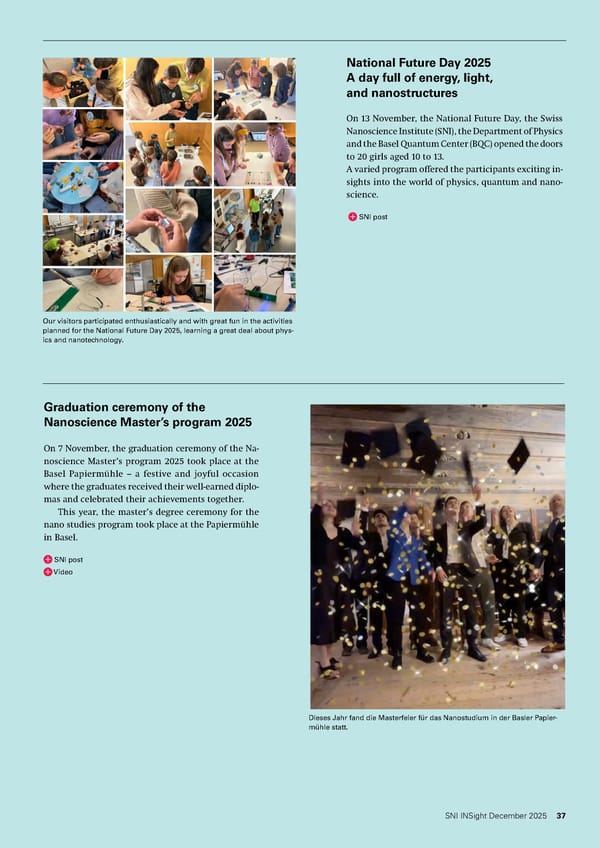
National Future Day 2025 A day full of energy, light, and nanostructures On 13 November, the National Future Day, the Swiss Nanoscience Institute (SNI), the Department of Physics and the Basel Quantum Center (BQC) opened the doors to 20 girls aged 10 to 13. A varied program offered the participants exciting in- sights into the world of physics, quantum and nano- science. SNI post Our visitors participated enthusiastically and with great fun in the activities planned for the National Future Day 2025, learning a great deal about phys- ics and nanotechnology. Graduation ceremony of the Nanoscience Master’s program 2025 On 7 November, the graduation ceremony of the Na- noscience Master’s program 2025 took place at the Basel Papiermühle – a festive and joyful occasion where the graduates received their well-earned diplo- mas and celebrated their achievements together. This year, the master’s degree ceremony for the nano studies program took place at the Papiermühle in Basel. SNI post Video Dieses Jahr fand die Masterfeier für das Nanostudium in der Basler Papier- mühle statt. 37 SNI INSight December 2025
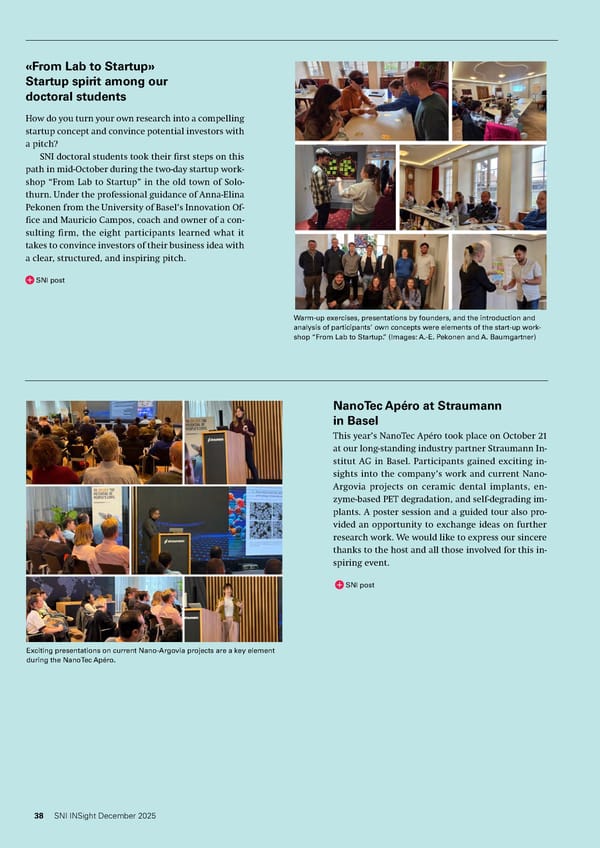
«From Lab to Startup» Startup spirit among our doctoral students How do you turn your own research into a compelling startup concept and convince potential investors with a pitch? SNI doctoral students took their first steps on this path in mid-October during the two-day startup work- shop “From Lab to Startup” in the old town of Solo- thurn. Under the professional guidance of Anna-Elina Pekonen from the University of Basel’s Innovation Of- fice and Mauricio Campos, coach and owner of a con- sulting firm, the eight participants learned what it takes to convince investors of their business idea with a clear, structured, and inspiring pitch. SNI post Warm-up exercises, presentations by founders, and the introduction and analysis of participants’ own concepts were elements of the start-up work- shop “From Lab to Startup.” (Images: A.-E. Pekonen and A. Baumgartner) NanoTec Apéro at Straumann in Basel This year’s NanoTec Apéro took place on October 21 at our long-standing industry partner Straumann In- stitut AG in Basel. Participants gained exciting in- sights into the company’s work and current Nano- Argovia projects on ceramic dental implants, en- zyme-based PET degradation, and self-degrading im- plants. A poster session and a guided tour also pro- vided an opportunity to exchange ideas on further research work. We would like to express our sincere thanks to the host and all those involved for this in- spiring event. SNI post Exciting presentations on current Nano-Argovia projects are a key element during the NanoTec Apéro. 38 SNI INSight December 2025
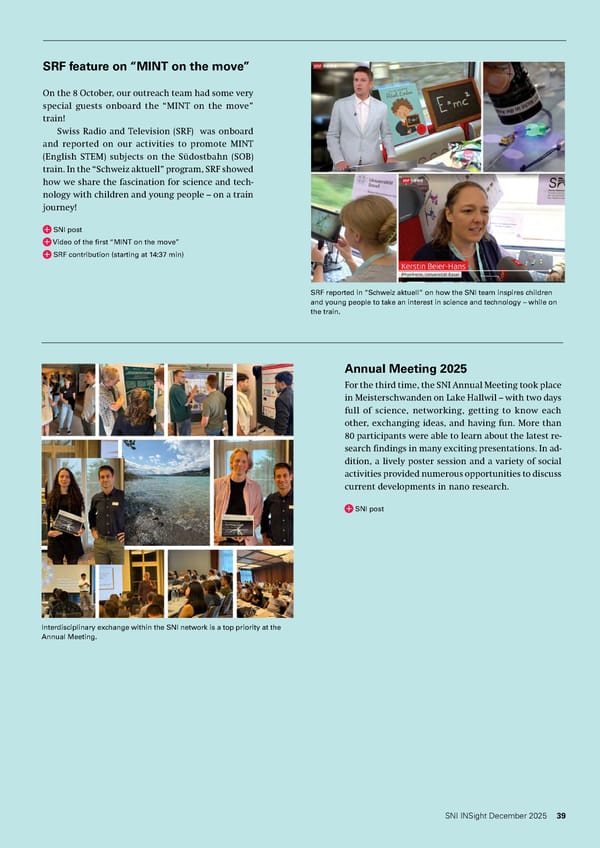
SRF feature on “MINT on the move” On the 8 October, our outreach team had some very special guests onboard the “MINT on the move” train! Swiss Radio and Television (SRF) was onboard and reported on our activities to promote MINT (English STEM) subjects on the Südostbahn (SOB) train. In the “Schweiz aktuell” program, SRF showed how we share the fascination for science and tech- nology with children and young people – on a train journey! SNI post Video of the first “MINT on the move” SRF contribution (starting at 14:37 min) SRF reported in “Schweiz aktuell” on how the SNI team inspires children and young people to take an interest in science and technology – while on the train. Annual Meeting 2025 For the third time, the SNI Annual Meeting took place in Meisterschwanden on Lake Hallwil – with two days full of science, networking, getting to know each other, exchanging ideas, and having fun. More than 80 participants were able to learn about the latest re- search findings in many exciting presentations. In ad- dition, a lively poster session and a variety of social activities provided numerous opportunities to discuss current developments in nano research. SNI post Interdisciplinary exchange within the SNI network is a top priority at the Annual Meeting. 39 SNI INSight December 2025
Basel Holiday Pass at SNI During the summer holidays, SNI participated in the Basel Holiday Pass program for the first time – with an exciting workshop on the world of mi- croscopy! Together, we built a Foldscope, collected samples outside, and examined them with various microscopes – from simple to high-tech! A special highlight was taking a look at the smallest details with the atomic force microscope, which allowed us to see structures smaller than a thousandth of a hair. SNI post The pupils took part in the SNI’s Holiday Pass program with great enthusiasm. 40 SNI INSight December 2025
SNI INSight Showcasing research and activities of the Swiss Nanoscience Institute About this publication Design concept: STUDIO NEO Concept, text and layout: C. Möller, M. Poggio Translations and proofreading: UNIWORKS (Erlangen, Germany) Image credits: C. Möller and named sources © Swiss Nanoscience Institute, December 2025 Cover image: A super-resolved portrait of the nuclear envelope Thousands of nuclear pore complexes (white dots scattered across the nuclear envelopes of human cells). The high-resolution image shows the com- plex spatial arrangement of these molecular passages. (Image: Y. Kuchkovska, Biozentrum, University of Basel) 41 SNI INSight December 2025
University of Basel Petersplatz 1 4001 Basel Switzerland www.unibas.ch Swiss Nanoscience Institute University of Basel Klingelbergstrasse 82 4056 Basel Switzerland www.nanoscience.ch Educating Talents since 1460.